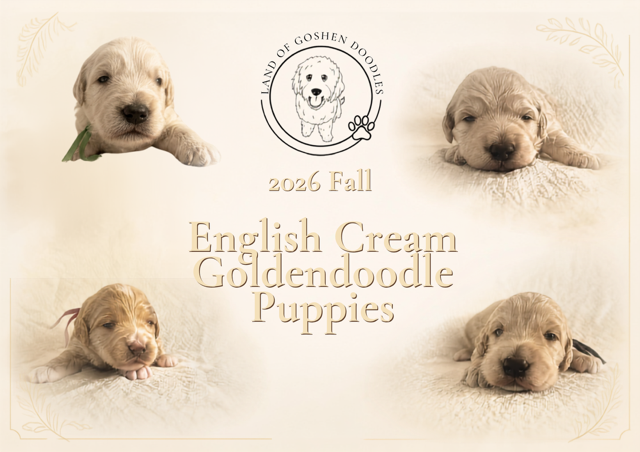
2026 Fall English Cream Goldendoodle Puppies
Seven Week Update: 7 Weeks!
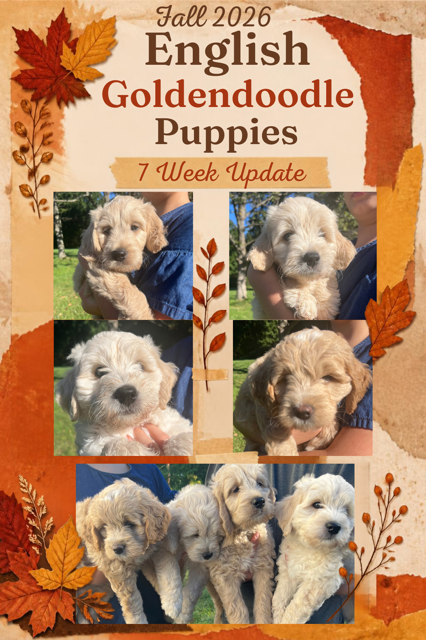
S E V E N weeks old already! Time has completely flown by, and we are officially in the homestretch before go-home day!
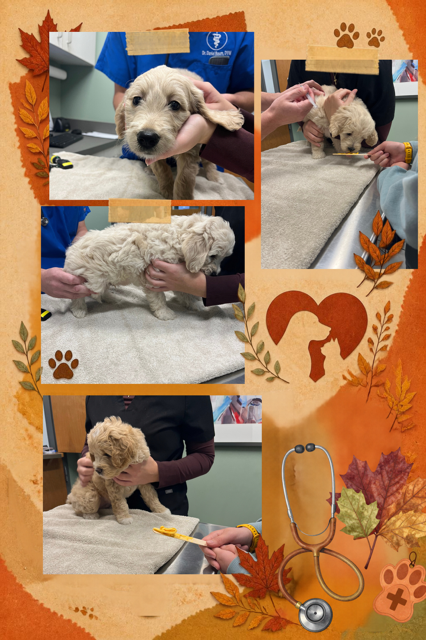
Vet Visit Success
The big milestone this week was taking the entire litter in for their 7-week health checkup at Hopewell Animal Hospital! All of the puppies were total superstars for Dr. Baum. They received a clean bill of health, got their first round of vaccinations, were microchipped, and took everything in stride with brave, happy tail wags.
Manners & Potty Training Progress
We have been working hard on early manners, especially teaching the pups to “sit to say please.” Whenever they want attention, a treat, or affection, we encourage them to pop into a sit rather than jumping up.
Potty training is also making huge strides! They are now pottying outside much more often than inside and have really begun to associate stepping out onto the grass with taking care of business. While there are still plenty of accidents—which is completely normal at this age—they have made so much progress!
Crate Progress & First Nights Expectations
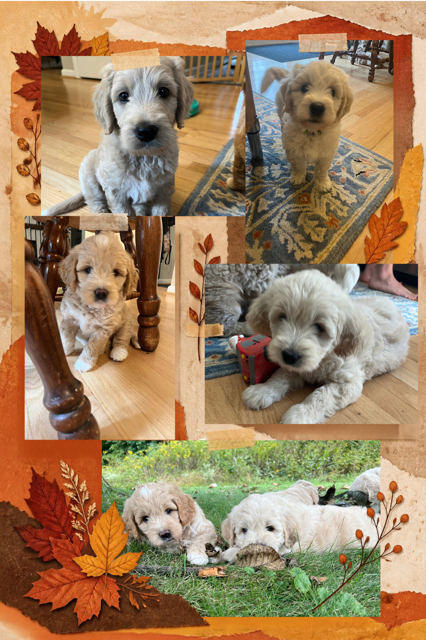
Crate training is coming along wonderfully! The puppies have transitioned to sleeping in their own separate crates overnight and are taking structured nap breaks in them for a few hours during the day.
What to expect at home: Even though they are doing great with their individual crate routine here, remember that moving to a new home is a big adjustment! It is completely normal for your puppy to whine or fuss a bit during their first few nights as they settle into a brand-new environment. Keeping the crate near your bed, using their scent blanket, and establishing a consistent, quiet bedtime routine will help them feel secure and adjust quickly.
Playtime & Socialization
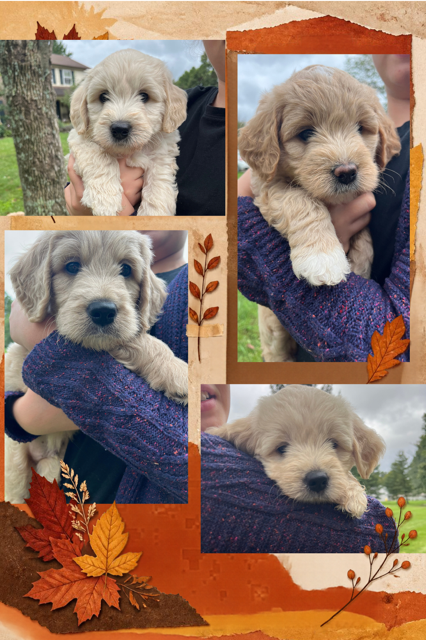
When they aren’t napping, their sweet, fun personalities are shining brighter than ever! They love active play sessions, exploring new toys, and romping around together. They’ve grown so confident, curious, and loving. Be sure to review our puppy socialization tips for when your puppy comes home!
We are spending these final days showering them with extra snuggles and getting go-home folders packed. We can’t wait for you all to meet your sweet puppies so soon!
Preparing For Your Puppy:
This week I’m squeezing multiple topics that my partner breeder, Timberidge Goldendoodle has highlighted in their blog.
Get ready to play educational games with your puppy
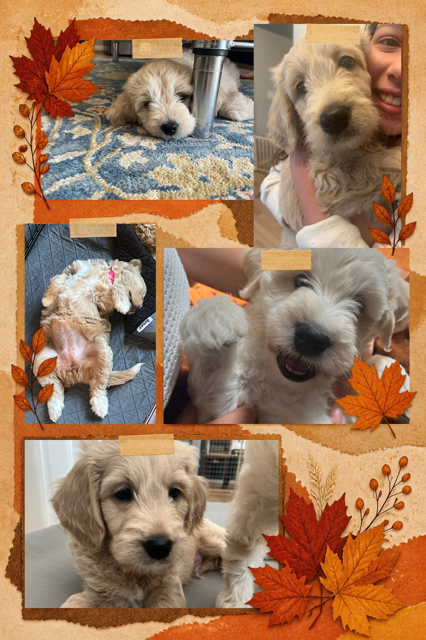
Did you know that there are fun games you can play with your puppy that teach him beneficial skills? It’s great to incorporate regular educational games into your puppy’s routine, so read through these suggestions, add any needed supplies to your puppy shopping list, and get ready for puppy playtime!
- Ball On The Wall – Encourages retrieving
- Supplies: A ball that your puppy can carry in her mouth
- How to play: Sit on the floor about 1-5’ from a wall. Put your legs in a “V” and sit facing the wall with your puppy between you and the wall. Toss the ball at the wall, encouraging your puppy to go after it. Give your puppy lots of praise when she brings the ball back!
- Variation: Once you’ve mastered Ball On The Wall, try playing retrieve in a hallway with all the doors closed (so your puppy can’t run away with the ball).
- Toy Trade – Prevents resource guarding
- Supplies: A toy that your puppy likes but doesn’t highly value and a high value treat
- How to play: Briefly play with your puppy using the toy. Ask your puppy for the toy by offering her a high value treat. Reward & praise her for giving you the toy, and give the toy back to her as soon as she finishes chewing. Gradually work on having her give you objects of higher value (i.e. a bone).
- Variation: Work on teaching your puppy the command “give” and ask her to drop the toy/bone on command in exchange for the high value treat.
- Hide & Seek – Encourages recall
- Supplies: Yummy treats
- How to play: Run away from your puppy, hide behind a corner, tree, couch or other object, and call your puppy to encourage her to find you. When she does, give her lots of praise and a yummy treat.
- Variation: Play Ping Pong by having a partner play with you and take turns hiding. While the first person is rewarding the puppy for coming, the second person hides.
Fostering the Child-Puppy Relationship
Goldendoodles are family dogs by nature, but there are a few steps you can take to help set your puppy and your kids up for a lifetime of friendship:
- When your puppy is sleeping, let her sleep – your puppy is growing & developing, and she NEEDS that sleep. Teach your children to respect a sleeping puppy by not interrupting her. Your puppy’s crate should be her safe retreat. When she’s in her crate, allow her to enjoy safe, undisturbed quiet time- this doesn’t mean that you all need to tip toe quietly around when the puppies napping! It just means that when the puppy is napping, let her enjoy that peaceful sleep untouched and wake up on her own good time.
- Involve your children in daily puppy care – allowing your children to participate in caring for the puppy will help grow the bond between them and their furry friend. It also helps the puppy learn associate good things with little people and helps her see the children as above her in the pack order. Younger children particularly love being helpers. Our kids enjoy (aka fight over) feeding the dogs, letting them out of their crates, opening the back door to let the dogs in/out, etc. We let them help brush the dogs with much supervision (remember, we want all puppy experiences to be POSITIVE!). Our children also love holding leashes on walks (children should only take your dog on a walk with adult supervision). If you don’t trust your puppy to not pull a young child over, you can attach two short leashes to one dog so both you & your child have a leash to hold. Be cognizant of your child’s age and maturity level. Older children can be more actively involved and younger children can be involved in smaller ways.
- Encourage your children to play with the puppy – puppy nips and jumps can be intimidating for some children. Teaching children how to act calmly around a puppy and how to play intentional games such as fetch and educational games (see some suggestions under week 3) can help both the children and the puppy learn how to interact with each other. Explain to your children that your puppy isn’t trying to hurt them when she’s nipping – she’s asking them to play with her.
- Include your children in puppy training – when you enroll your puppy in a puppy kindergarten class, ask about bringing your child along (assuming he’s old enough and mature enough to participate). Our children enjoy practicing sits and downs with our dogs, dolling out hotdog slivers to the eager participants. Our dogs think it’s great! Be sure to always supervise children/puppy training sessions.
- Teach your children to respect the puppy – sometimes it’s challenging for children, especially young ones, to distinguish between their favorite stuffie and a real-life fluffy puppy. Many children need to be patiently taught to be gentle and kind with animals. “No hugging dogs” is a rule in our home because a preschooler bear hug around the neck is too much our small dogs (our dogs don’t mind but we’re afraid they might accidentally get hurt since they’re significantly smaller than the ones dolling out the hugs). If there are times when you aren’t able to supervise your children’s interaction with your puppy, it might be best (and safest) to put your puppy in her crate. Remember, that crate should be your puppy’s safe place. This article by AKC has more helpful tips about teaching children to respect dogs.
- Teach your puppy to respect your children – sometimes children play with their puppy like they themselves are, well, a puppy. Young kids particularly may act like a dog when playing with their new furball. While you want your children to have fun with their puppy, you also want your puppy to know that your child is a leader who is to be respected and not a puppy littermate. Encouraging your children to care for the puppy (i.e. feeding), train the puppy (i.e. having the puppy do a few sits & downs each day), and do bonding exercises (see the above video in week 3). These are all are easy ways to help establish your child as a leader over your puppy and not a puppy peer. If you find that your puppy is particularly mouthy and jumpy with your child, your puppy is likely viewing your child as a littermate.
- Establish a safe place for your dog, usually either a dog bed or crate. Teach your children that when the puppy is in her safe place, they need to let her alone and they may not touch her. Your puppy will learn that she can retreat to her safe place if she becomes overwhelmed with a situation or if she just needs a nap.
Six Week Update: 6 Weeks!
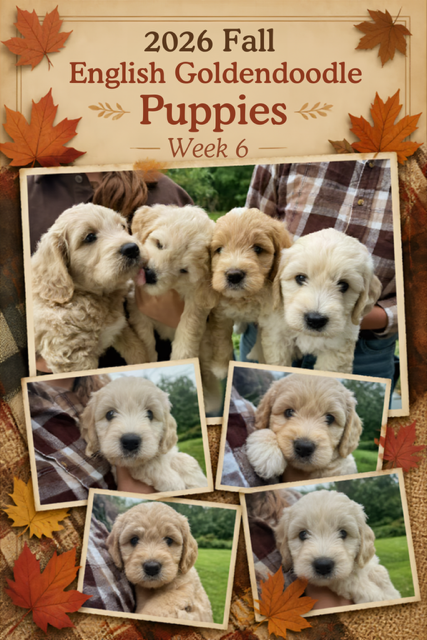
Can you believe our sweet puppies are already 6 weeks old? Time is flying by, and we are soaking in every single moment with these little ones before they head off to their forever homes!
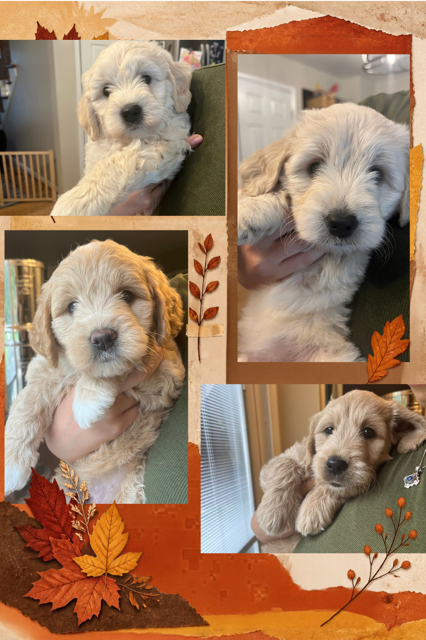
At 6 weeks, the puppies have transitioned from sweet, sleepy babies into playful, curious, and expressive little dogs. Their unique, sweet personalities are really starting to shine through brighter every single day, and watching them learn, play, and explore right here in the heart of our home has been such a joy.
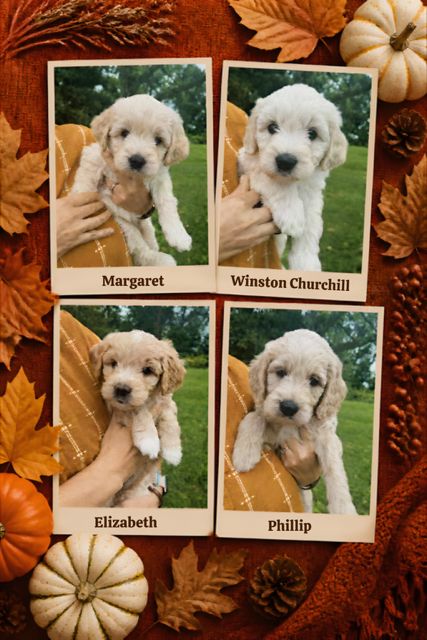
What We’re Working On at 6 Weeks
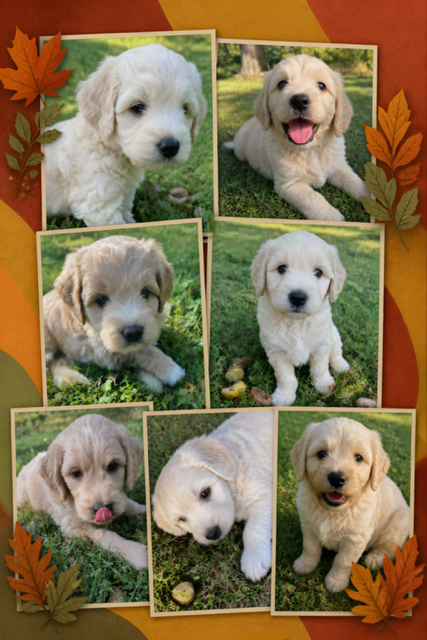
Outdoor Play & Potty Success: We’ve been blessed with beautiful dry weather this week, which means lots of daily outdoor playtime! The puppies are loving the fresh air and grass, and they are doing fantastic with their potty habits—they are now going potty outside much more than they go inside!
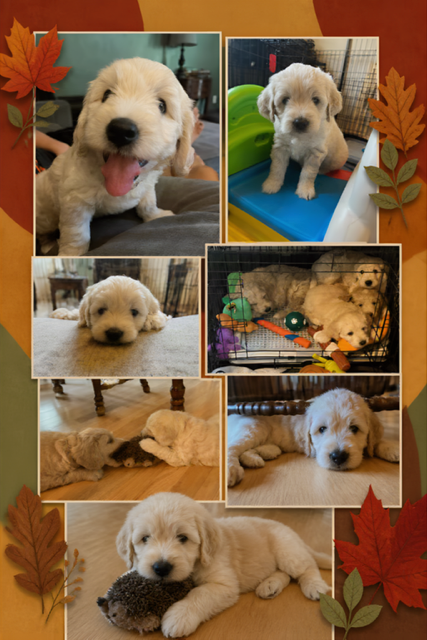
House Confidence & Kitchen Play: Inside, the pups get plenty of supervised playtime in our kitchen and family room. As their confidence grows, they are eager to roam, investigate new sounds, and explore every corner of the house.
Crate Milestones: They have been doing wonderful during their daytime crate practice. At night, they’ve been sleeping two puppies per crate with no issues at all! This week, we will be transitioning them into their very own individual crates at night to make their eventual transition to your home as smooth as possible.
Dry Kibble Transition: The puppies are getting almost all of their nutrition from their puppy food now and are starting to eat without being soften.
Active Socialization & Sensory Exposure
We’ve had so much fun introducing the puppies to all kinds of new sights, sounds, and experiences! Here are a few examples:
- New Sights: They’ve been practice-meeting new people, seeing umbrellas open and close, and getting used to seeing humans wearing big hats and such.
- Fun & Loud Sounds: From everyday household noises like shaking open a fresh trash bag and running our loud kitchen blender to outdoor sounds like our rooster crowing—and even experiencing their very first real thunderstorm—the pups have taken it all in stride with great curiosity!
People-Loving Sweethearts: They absolutely adore people! Anytime someone walks into the room, they come running over with wagging tails, eager to play, cuddle, and get all the love.
PREPARING FOR YOUR PUPPY
Bringing home a new puppy is such an exciting season! A little bit of advance preparation makes those first few days smooth, restful, and fun for both your family and your new furry addition.
1. Essential Gear & Nutrition Checklist
Beyond having a collar and leash for your puppy, here are some other essentials to have.
TLC Whole Life Puppy Food: Your puppy is currently thriving on TLC Whole Life Puppy Food. We will send you home with a generous starter baggie of food, but we strongly encourage ordering a bag directly to your door soon so you have a seamless supply ready for go-home day.
Crate & Playpen Setup: We recommend a collapsible metal wire crate equipped with an adjustable divider panel so the space can expand as your puppy grows. Attaching an exercise pen (playpen) to the crate creates a wonderful safe zone for play, naptime, and supervised independence when you can’t offer 100% eyes-on attention.
Snuggle Puppy: A crate essential! The simulated heartbeat helps soothe your puppy as they transition to sleeping solo, easing nighttime whimpers by mimicking the comforting feel of their littermates.
Chew Toys & Enrichment: Puppies navigate their environment with their mouths! Stock up on an assortment of safe chew options (rubber, plush, and rope). If offering bully sticks, always secure them inside a bully stick safety holder so your pup cannot swallow the small end piece. Kongs stuffed with peanut butter, pureed pumpkin, or plain canned dog food and frozen make fantastic, long-lasting crate rewards.
Potty Training Supplies: Gather an enzymatic cleaner (standard household cleaners don’t fully eliminate the scent markers that attract pups back to the same spot) and a potty bell if you choose to train them to ring a doorbell when they need to go out!
Refer to our Puppy Shopping Guide for more idea on what to get before you bring your puppy home.
2. Potty Training Essentials & Setting Up for Success
Potty training is all about consistency, supervision, and building great habits right from day one!
Establish a Frequent Schedule: Puppies need to go out immediately upon waking up, right after eating or drinking, after a vigorous play session, and every 1–2 hours in between (start at every 30minutes while they awake when you first bring your puppy home so they understand where to potty).
The Potty Bell Method: If you’d like to train your pup to ring a bell to go outside, hang it on the exit door at puppy eye-height. Every single time you take them out to potty, gently take their paw or nose, tap the bell so it rings, and say “Outside!” before opening the door. They will quickly connect the sound with going out.
Praise Immediately: As soon as your puppy finishes going potty outside, give lavish verbal praise and a high-value treat within 3 seconds so they connect the reward with the action.
Managing Accidents: If an accident happens inside, never punish or scold the puppy—this only teaches them to hide when they need to go. Simply clean it up quietly using an enzymatic cleaner to remove any residual scent markers.
3. Introducing Your Puppy to an Existing Adult Dog
If you already have a dog at home, bringing in a new puppy is a big adjustment for everyone! Older dogs—especially seniors—often appreciate having boundaries in place so they don’t feel overwhelmed by relentless puppy energy.
First Impressions Matter: Introduce them on neutral territory (like the front yard or driveway on leashes) before bringing the puppy inside. Keep initial interactions short, calm, and positive.
Create Safe Escape Spots & Vertical Elevation:
- For the Puppy: It’s very helpful if there is a couch or open furniture piece that the puppy can duck under if they ever feel nervous, overwhelmed, or need a quick moment to retreat.
- For the Adult Dog: Make sure your older dog has access to a couch, bed, or raised space that they can easily jump onto when they want space from the puppy. Because the puppy won’t be able to jump up there yet, this gives your older dog a puppy free spot!
Use Playpens & Gates: A playpen or baby gates give your adult dog guaranteed quiet time where they can relax untouched. Puppies don’t naturally understand adult boundaries yet, so managing their proximity prevents friction.
Respect the Adult/Senior Dog: Maintain your older dog’s usual feeding, walking, and cuddle routines so they know they aren’t being replaced. Always feed them separately to prevent resource guarding.
Allow Natural (Appropriate) Correction: It is normal and healthy for an older dog to give a soft growl or lip curl to tell a puppy “that’s too much.” As long as it is gentle, let your older dog communicate—it teaches the puppy vital canine social cues! If the puppy ignores the warning, step in and redirect the puppy to a toy or pen area.
4. Family Ground Rules & Child Preparation
Because our litters are raised in the heart of our home alongside our family, they love human interaction! To keep things positive and safe for everyone, establish these simple household rules before arrival:
- Protect Their Rest: Growing brains and bodies require substantial sleep! Teach children that when the puppy is in their crate or pen area, it is quiet time and they should be left to sleep uninterrupted.
- Involve Your Little Helpers: Kids excel when given age-appropriate tasks! Involve them by letting them measure food portions, refresh water bowls, or tag along on outdoor potty trips.
- Managing Puppy Nipping: When a puppy gets mouthy or overly enthusiastic during play, instruct kids to “be a tree”—freeze, tuck hands under armpits, and redirect the puppy’s focus by offering an approved chew toy instead.
5. Exercise & Physical Development
Protecting developing joints and growth plates is crucial during the first year of life. Free play in the yard or home is great, but structured, repetitive exercise (like forced running or long pavement walks) should be kept strictly within age-appropriate limits.
Here’s what Timberidge Goldendoodles has to say about puppy exercise:
“Familiarize yourself with what sorts of activities are appropriate for your puppy at different stages of development. You want to give your puppy a variety of unique positive experiences, but your puppy is still growing & developing, so you don’t want to push your puppy too far. For instance, climbing up one to two stairs is an appropriate challenge but climbing a flight of stairs is not a good idea for a young puppy (a study done on 500 dogs showed that puppies allowed to climb a flight of stairs regularly before 3 months old were more likely to develop hip dysplasia). Remember, free running and playing is a great option because your puppy can rest whenever she feels inclined to do so. If you’d like to read more about puppy exercise, check out AviDog’s puppy exercise guidelines. This article from AKC also gives some helpful puppy exercise tips.“
https://timberidgegoldendoodles.com/
Refer to the official Puppy Culture Exercise Chart for safe activity guidelines as your puppy grows.
6. Veterinary Setup & Training Routine
Initial Vet Exam: Be sure to schedule your puppy’s preliminary wellness checkup with your local veterinarian. They will be receiving their first set of vaccinations at Hopewell Animal Hospital on September 28th (your vet will want to know that date!).
Establishing Training Support: We advise connecting with a reputable local trainer early on. In-home sessions during the first week or two work wonders for establishing household structure, followed by structured puppy socialization classes once your pup receives their vaccinations! For local trainers that work with young puppies we recommend:
Five Week Updatet: 5 Weeks!
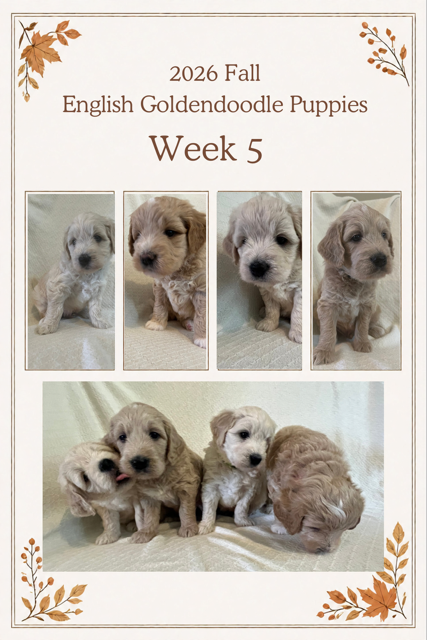
Can you believe our puppies are already five weeks old? This week has been filled with major steps forward as the pups grow more confident, curious, and playful every day.
Feeding & Weaning Transitions
The puppies have officially transitioned from having goat milk mixed into their food to eating moist puppy food softened with warm water. As their teeth continue to come in over the next few weeks, we will gradually reduce the amount of water until they transition to dry kibble. They are eating three meals a day like champs, though sweet Heidi still steps in to nurse them a bit as well!
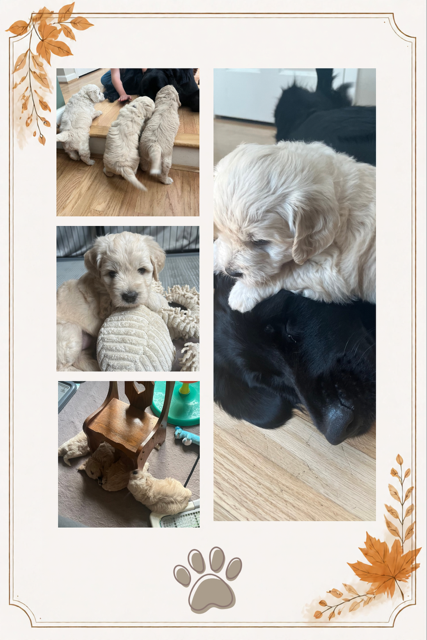
Potty Training Progress
We’ve been taking the puppies outside multiple times throughout the day, and they are really starting to understand that the outdoors is their designated potty spot! It’s so fun watching those lightbulb moments happen.
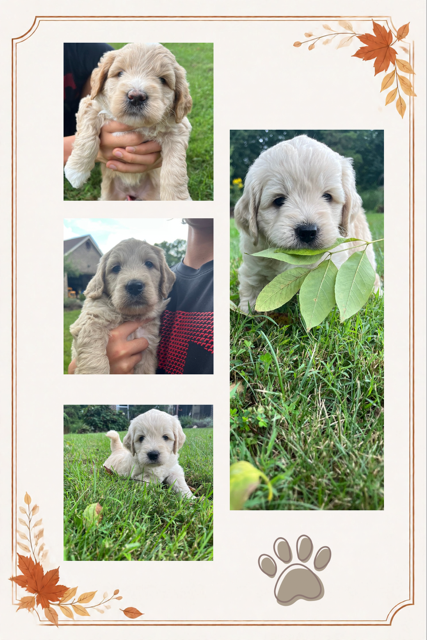
Crate Training Routine
Nighttime crate training is officially underway! Right now, all four are sleeping cozy together in one crate at night, and they have been absolute dream sleepovers—not a single whine when they go in. Over the coming weeks, we will transition them into pairs, and eventually into their own individual crates. They’ve also been taking naturally to napping in the crate on their own, so we’ll be practicing structured daytime crate sessions this week.
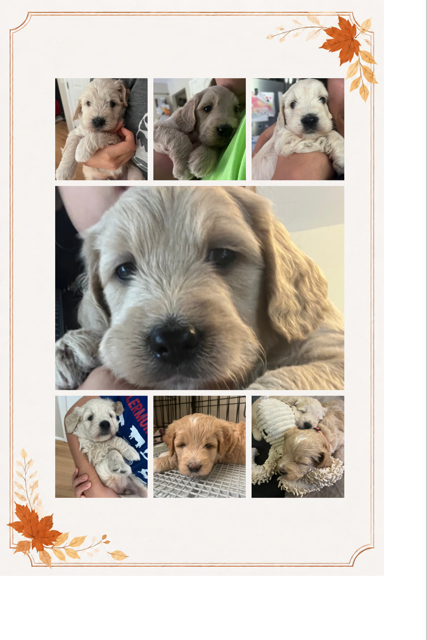
Socialization & Play
These little ones are incredibly social and love being with us. They have so much fun exploring outside their pen and adventuring in the yard. A big highlight of their week has been interacting with Ember—they are endlessly fascinated by her, and it’s wonderful seeing them learn healthy dog social cues.
Week Five Conclusion
As we head into week six, we are getting closer every day to the moment these sweet pups meet their forever families! We’ll be continuing to build on their crate and potty routines, keeping up with outdoor play, and helping them master all of their big-puppy skills.
Thank you so much for following along on their journey. Be sure to check back next week for more photos and developmental updates!
PREPARING FOR YOUR PUPPY
The Importance of Naps
It’s easy to focus on all the playful energy a new puppy brings, but structured rest is just as important! Ensuring your puppy gets plenty of undisturbed nap time is essential for curbing undesirable behaviors, managing overstimulation, and keeping them healthy and happy.
Here’s what Timberidge Goldendoodles has to say on napping:
“Think about a napping place – The puppies spend most of their lives sleeping now, but did you know that your new furbaby is going to need lots of sleep when you bring her home, too? Puppies, just like small children, require naps throughout the day. When your puppy is sleeping, try to allow her to rest untouched (it’s okay for noisy life to carry on around her while she snoozes, but it’s best not to physically disturb her as much as possible). This may mean that you need to guide her to a different spot than the one she’s initially chosen. Puppy Culture estimates that an 8-10 week old puppy sleeps 3 hours and then is awake for 1 hour before going back down for another nap. Puppies are like little children – sometimes they don’t realize that they’re tired and need you to put them down for a nap. Puppies can get over stimulated and become overly tired just like toddlers. It’s your job to help regulate them.”
https://timberidgegoldendoodles.com/
The AKC gives some helpful insight into the importance of puppy sleep (You can read the whole article here):
“Although puppies may seem like little bundles of energy, in fact, they sleep 15-20 hours a day. One minute your puppy may be a miniature tornado, and the next he’s fallen soundly asleep, almost mid-activity. Sleep is essential to healthy growth: during sleep his central nervous system, brain, immune system, and muscles are developing. All of that sleep also helps him rest up during growth spurts… household members, especially children, should leave your puppy alone while he is sleeping. Plan his day so that active time is followed by quiet time for sleep. He’ll most likely be ready for a nap after playtime or a walk, sleep for a while and then wake up ready for anything. Your puppy may nap every hour or so, sleeping from 30 minutes to as long as two hours. All of this sleep is perfectly normal.”
— Jane Reisen from the American Kennel Club (AKC)
https://www.akc.org/expert-advice/health/how-much-do-puppies-sleep/
Four Week Update: 4 Weeks!
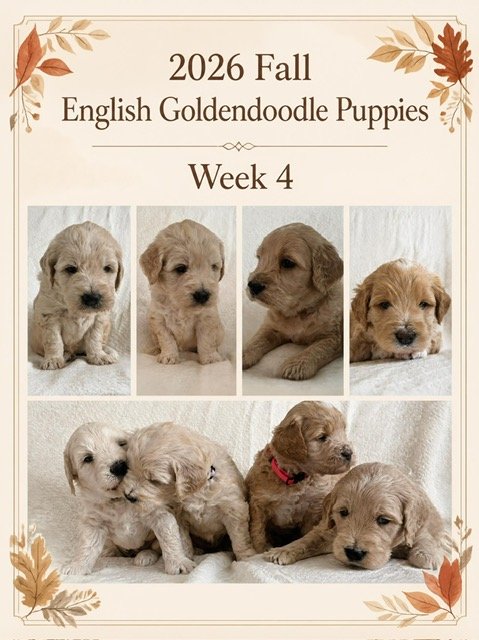
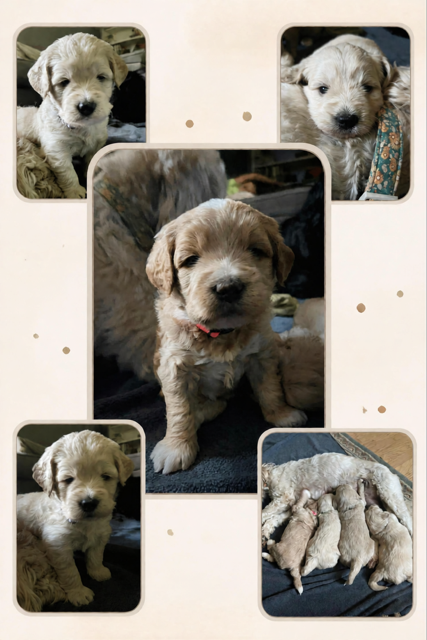
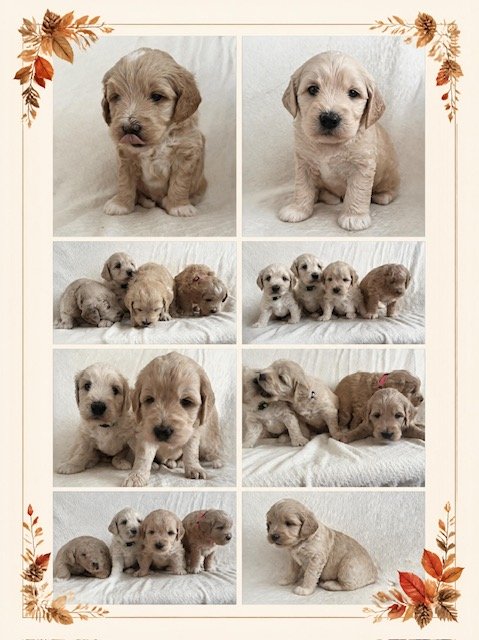
Four weeks already! Heidi’s puppies are officially a month old, and we have entered one of the absolute sweetest, most fun stages of puppyhood. Their little personalities are blossoming, their physical abilities are exploding, and they are becoming so wonderfully social and affectionate!
Expanding Their World
This week, the puppies were given a slightly larger play area just outside of their whelping box to explore! While they still spend plenty of time cozying up inside their whelping box where they feel most safe and comfortable, having this extra space gives them room to stretch their legs, practice walking, and wrestle with their siblings. Because they are growing so fast and becoming more inquisitive by the day, we will be expanding this play area even further as the week goes on!
First Outdoor Picnic!
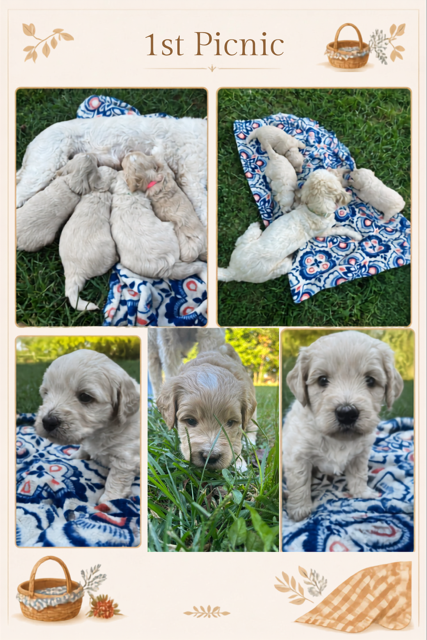
After a week of high temperatures, we were blessed with a beautiful day and took the puppies outside for their very first outdoor picnic! Experiencing real grass, fresh breeze, new smells, and natural sunshine for the first time is such an exciting milestone in their socialization journey. They were so curious sniffing around the grass and soaking up the warm sun before all piling together for a cozy outdoor nap.
First Big Kid Food: Goat Milk & Kibble Purée!
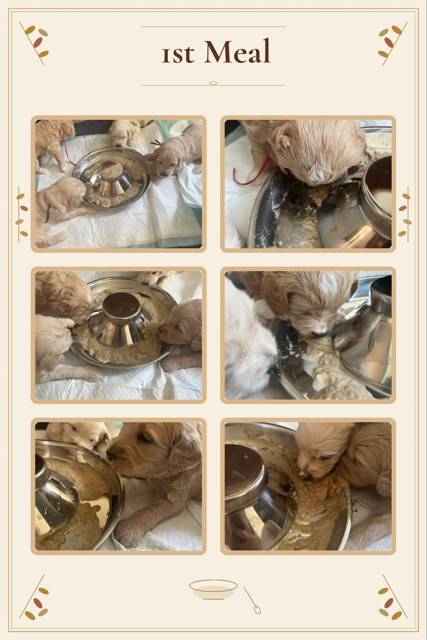
This week, the puppies took their first step toward weaning! We introduced them to solid food once a day—a delicious purée of high-quality puppy kibble blended with fresh, nutrient-rich goat milk. They took to it with absolute enthusiasm! Eating from a shallow dish is always a messy, adorable learning process (with plenty of puppy paws landing straight in the bowl), but they are quickly getting the hang of it and loving their daily “porridge” time.
So Social & Full of Love!
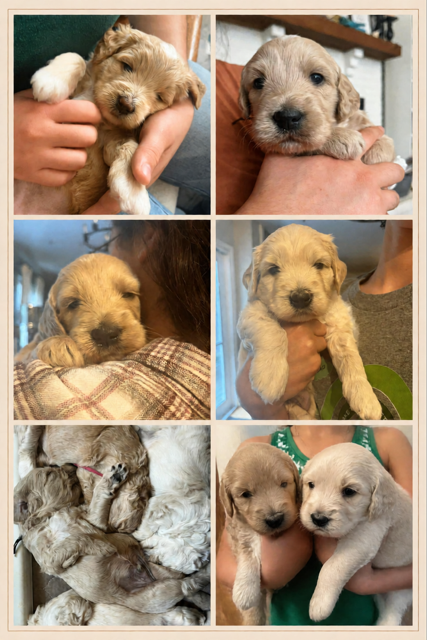
One of our absolute favorite parts of Week 4 is watching how eager the puppies are to interact with our family. They are becoming so affectionate and truly seek us out! Whenever we sit down near their space, they eagerly crawl right onto our laps, shower us with sweet little puppy kisses, and roll right over demanding belly rubs. They love being near us, and their little tail wags whenever we enter the room just melt our hearts.
Week Four Conclusion
From exploring outside their whelping box and eating real food to their first outdoor picnic and cuddling on our laps, Week 4 has been packed with major developmental milestones. Heidi is still doing a wonderful job mothering her pups while enjoying a bit more freedom as they start weaning. We can’t wait to see how much more their confidence and personalities grow over the coming week!
Preparing for Your Puppy: Shopping List, Nutrition & The “Swap Game”
Now that your puppy is 4 weeks old, it’s the ideal time to start gathering essential supplies, getting your home ready, and learning a few simple behavioral strategies that will make your puppy’s transition into your home smooth, safe, and positive!
1. What to Buy & Free Puppy Training Podcasts
Puppy Shopping List: To take the guesswork out of getting ready, we have put together a complete checklist of all our favorite tested-and-approved puppy supplies! You can find our top recommendations for crates, playpens, grooming tools, chews, and more on our New Puppy Shopping List.
(Please note: As an Amazon Associate, I earn from qualifying purchases when you shop through our links, at no extra cost to you—thank you so much for supporting our program!)
Free Training Podcasts: We highly recommend tuning into Baxter & Bella’s online resources before your puppy comes home! You can listen to their free Podcast Roadmap, which covers a wide range of essential topics—from navigating your first 24 hours to crate training, biting, and house manners.
2. Puppy Food & Nutrition Basics
What We Feed: We raise our puppies on TLC Whole Life Puppy Food. It is a premium, nutrient-dense formula packed with quality animal proteins, healthy fats, and essential nutrients that support rapid growth, brain development, and sensitive young tummies. We strongly recommend ordering a bag 2 to 3 weeks before pickup day so it arrives at your doorstep well before your puppy comes home!
How to Transition (If Switching Foods): If you eventually plan to feed a different brand, it is crucial to do so gradually over 7 to 10 days once your puppy has settled into your home. A sudden food change causes digestive upset and loose stools. Slowly mix the new food into their TLC food, increasing the ratio of new food bit by bit each day.
What to Look for in Quality Dog Food: When evaluating dog food brands, always look for:
- Named whole animal protein sources (such as chicken meal, lamb, or salmon) listed as the first ingredients rather than generic “meat by-products.”
- Balanced healthy fats (like chicken fat or salmon oil) rich in Omega-3 and Omega-6 fatty acids for coat and brain health.
- Absence of artificial colors, synthetic preservatives (BHA/BHT), corn, wheat, or low-quality filler grains.
- Formulated to meet AAFCO nutritional standards for growth and development.
3. Preparing Your Home: Redirecting Chewing
Puppies explore the world entirely with their mouths—especially as their baby teeth come in! Chewing is a completely natural behavior, so rather than scolding your puppy when they pick up an unacceptable item (like a shoe, rug corner, or furniture leg), your goal is to immediately redirect them:
The Swap Rule: Gently remove the unacceptable item and immediately replace it with an approved toy or chew that matches what they were looking for.
Provide a Variety of Textures: Keep a mix of both hard and soft chews on hand to mimic whatever item your puppy is craving. If they are gnawing on a hard wooden table leg, offer a hard nylon toy or a wooden chew stick. If they are chomping on a soft couch cushion, swap it for a plush toy or a soft rubber ring.
4. Preventing Resource Guarding: The Trading Game (Don’t Chase!)
When a puppy grabs something they shouldn’t have, the natural human reaction is to chase after them to grab it back. Never chase your puppy! To a pup, being chased turns the object into a high-stakes game of keep-away or can make them feel threatened, leading to resource guarding (growling or running away to hide their “treasure”).
Instead, practice the “Trade Game” using a positive marker word:
1. Offer a Higher-Value Swap: Approach your puppy calmly with something irresistible—a high-value treat (like a piece of freeze-dried liver or cheese) or an even more exciting toy.
2. Mark the Moment: Hold the treat right near your puppy’s nose. As soon as they let go of the item in their mouth to take the treat, say your marker cue “YES!” in a happy, upbeat voice, and give them the reward.
3. Return the Item (When Safe): If the item they had wasn’t dangerous (like one of their own toys), hand it right back to them after they finish their treat! This teaches your puppy a powerful lesson: giving up an item to you doesn’t mean they lose it forever—it just means something wonderful happens whenever you approach!
4. Dangerous Items: If they grabbed something unsafe (like a sock), quietly slide the item out of sight while they are enjoying their treat and immediately give them an approved chew toy instead.
Three Week Update: 3 Weeks!
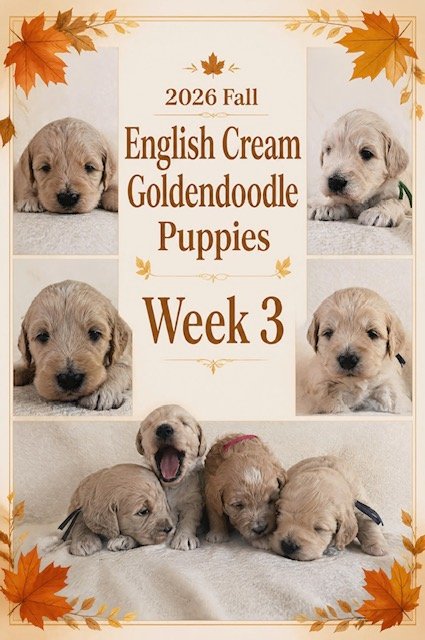
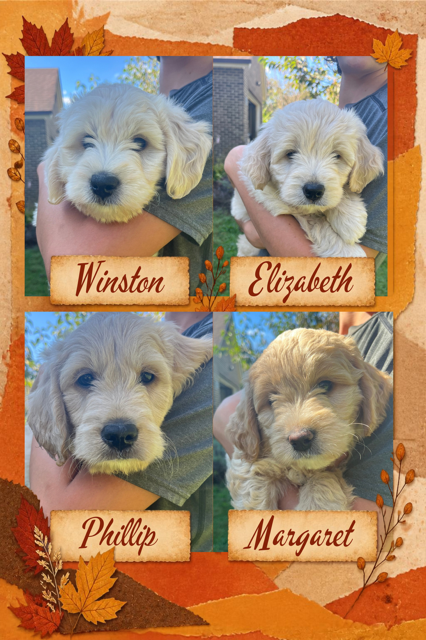
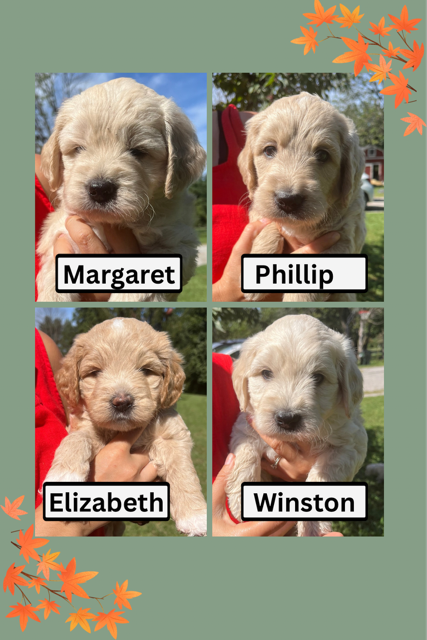
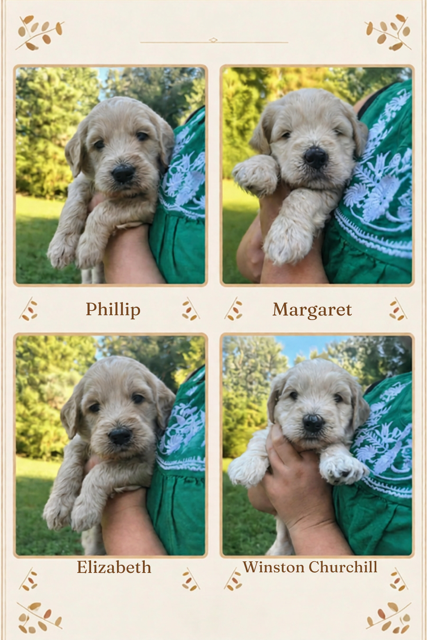
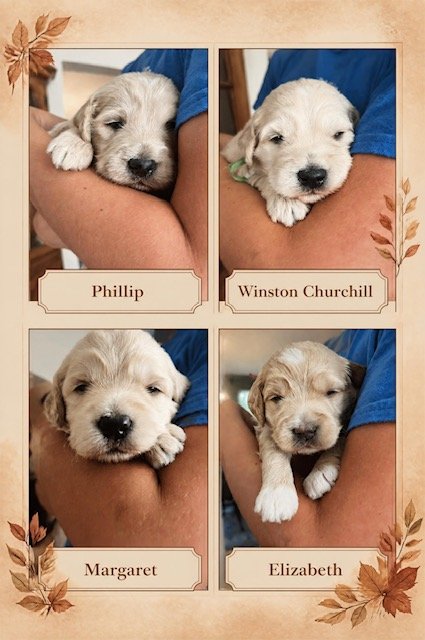
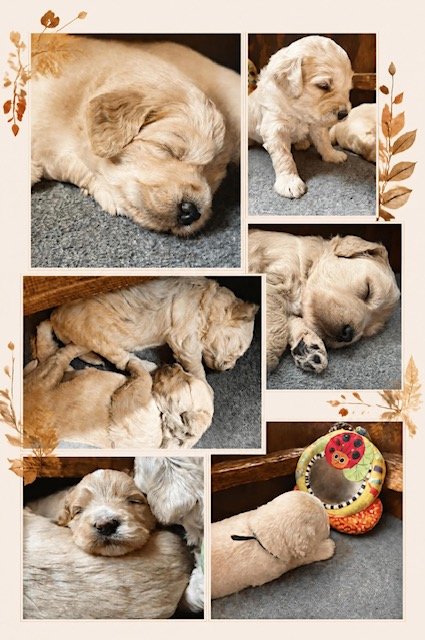
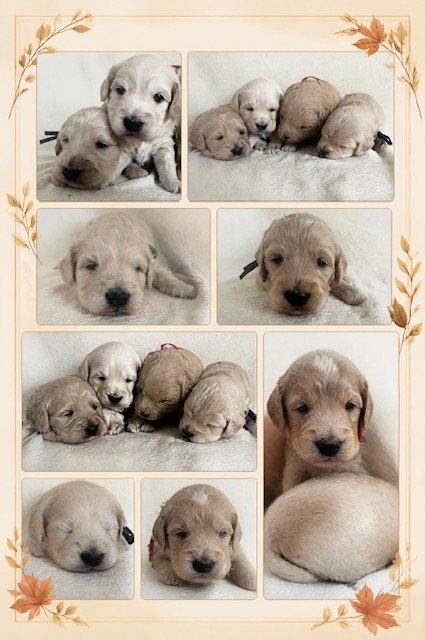
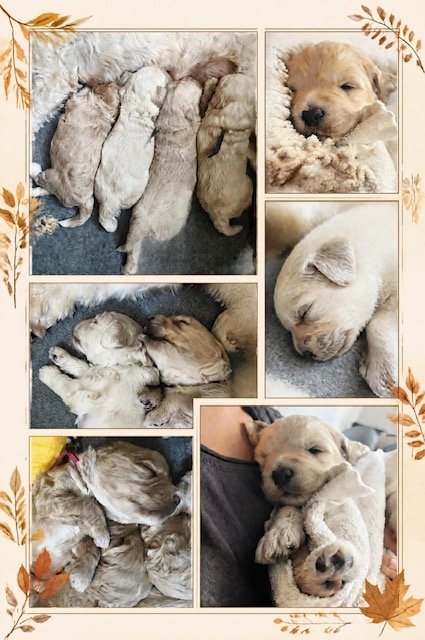
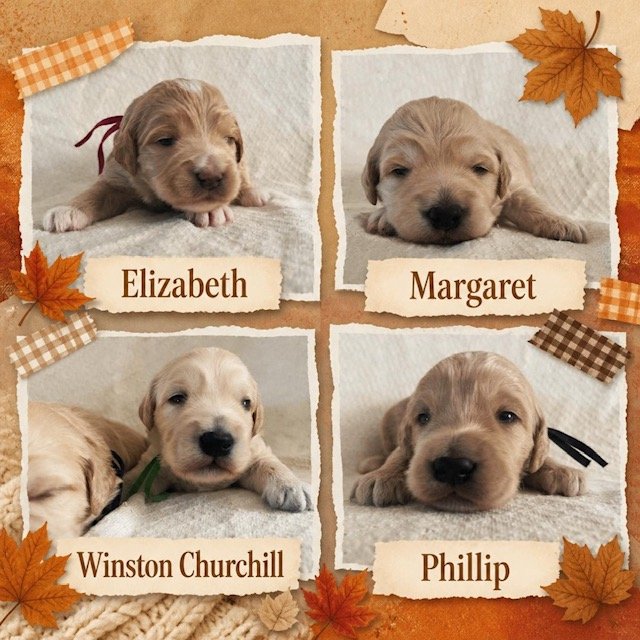
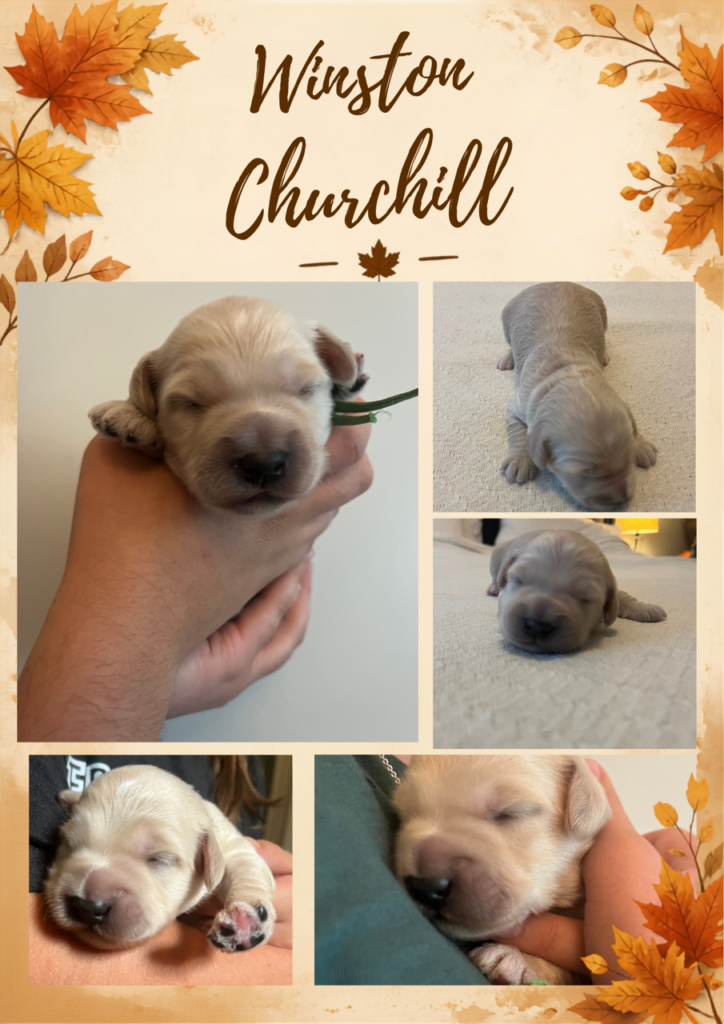
Heidi’s royal litter is officially 3 weeks old! It has been another whirlwind week full of exciting milestones, big developmental leaps, and so much fun. Our 4 little ones—Phillip, Winston Churchill, Elizabeth, and Margaret—are seeing more clearly, tuning into the world of sound, and becoming sweeter and more social by the day!
Open Eyes, Hearing & Early Play
Each day this week, the puppies’ eyes have been opening wider and wider. At this point, they are nearly all the way open, and it is beyond sweet seeing them focus on the world around them—and on our faces when we lean over the box!
Along with their sight, the puppies’ hearing has officially online! To support their developing brains, we have started playing classical music for them during quiet periods of the day. Just as classical music supports cognitive development in human infants, it offers wonderful benefits for growing puppies, too.
In addition to classical tunes, we have begun gently playing sound desensitization playlists for the litter. This playlist introduces them to everyday noises that can sometimes startle or stress dogs—such as thunderstorms, fireworks, crying babies, sirens, and traffic noises. By pairing these sounds with a warm, cozy environment while they nurse and rest, we help ensure they grow up to be confident, unshakeable adults who take everyday sounds right in stride.
Their movement is progressing just as quickly! Those wobbly first steps aren’t nearly so wobbly anymore. While there are still plenty of adorable stumbles and head bobs, all four pups can get around with impressive speed! There is so much playing, wrestling, and exploring happening in the whelping box, and they are getting very close to needing a bigger play area.
Week 3 Conclusion
Heidi’s puppies are officially entering what we love to call the “fun stage!” Now that their senses are active and their legs are moving, we are ramping up our socialization efforts to give them a wide variety of gentle, positive new experiences every single day.
Next week promises to be an extra big one—we are planning to move the puppies to a larger exercise area, introduce them to their very first taste of fresh goat milk, and (weather permitting!) take them outside to experience the great outdoors.
Preparing For Your Puppy
Finding & Scheduling Your Vet
Now is the ideal time to select a veterinarian and reach out to their office. At 6–7 weeks old, your puppy will receive a thorough health examination, their first set of core vaccinations, a stool sample check, and a microchip administered by Dr. Baum at Hopewell Animal Hospital.
Your puppy will be due for their second round of vaccinations about 2 to 4 weeks after their initial visit with us. Because veterinary clinics often book out well in advance—and some vets prefer to see new puppies within the first few days of arriving home—we recommend calling your chosen clinic now to establish care and ask about their preferred timeline.
Pro Tip: Bring a bag of high-value treats to your puppy’s first vet visit! Giving them tasty treats throughout their examination ensures they associate the vet clinic with praise, love, and delicious food right from day one.
Building an Unbreakable Bond
Bonding with your puppy right away is just as vital as early socialization. In fact, establishing a secure bond comes before formal training! When a puppy feels completely safe, loved, and secure in your presence, they naturally look to you for guidance, making future training exponentially easier.
That bond begins the moment you pick up your puppy. Having a dedicated passenger cuddle, pet, and speak softly to the puppy in the car on the ride home goes a long way in soothing their nerves and building early trust. Creating predictable daily routines around feeding, snuggling, play, and gentle handling helps your puppy feel secure in their new environment.
Here’s a video from Timberidge Goldendoodles on bonding & body handling activities to do with your puppy.
Tried-and-True Bonding Tips:
1. Assign a Car Companion: Have someone in the vehicle whose sole job is to offer soft comfort and reassurance during the drive home.
2. Establish a Potty Spot Early: Take your puppy to their designated potty area every 30 minutes while they are awake and out of their crate.
3. Give Them Space to Adjust: Let your puppy approach you naturally rather than constantly reaching out to pick them up. It can be overwhelming for a small puppy to be crowded or held nonstop right away. Let them nap when they need to rest!
4. Play Safely with Toys: Always use dog toys during playtime to teach them what is appropriate to chew on. Avoid games where children encourage the puppy to chase them, as this can trigger excitement, jumping, and nipping.
5. Keep Them Close at Night: Your puppy is used to sleeping snuggled up against three littermates. Placing their crate on your nightstand or sleeping on the couch next to their crate for the first few nights provides enormous comfort. If you know they don’t need to go potty, simply placing a reassuring hand against the crate door helps them settle and feel safe.
6. Sit on the Floor: Getting down on their level makes you approachable and inviting.
7. Take Naps Together: Snuggling together for a afternoon nap is a wonderful way to build trust!
8. Redirect Instead of Scolding: Use redirection when your pup gets into mischief. Remember: a puppy who isn’t listening or is acting extra mouthy is usually an overtired puppy who desperately needs a nap!
9. Use Food & Treats: Food is a fast track to a puppy’s heart. Use their kibble or small, gentle treats for bonding games and positive reinforcement (just introduce new treats slowly to protect sensitive tummies).
10. Give Yourself & Your Pup Grace: Building a relationship takes time and patience. Be easy on yourself and your puppy as you both navigate new routines. Take time to step back, slow down, and simply enjoy your new companion!
Whenever you feel frustrated during the thick of early puppy training, take a breath, set the training criteria aside for the day, and focus purely on bonding. Building a strong foundation of love and trust will make tomorrow’s training go infinitely smoother!
Watch & Learn: Check out this helpful video from Baxter & Bella on Bonding With Your Puppy for more great insights on starting off on the right foot.
Two Week Update: 2 Weeks!

From opening eyes and wobbly little steps to pink noses darkening and lots of chunking up—what a big week it has been for Heidi’s puppies! The 4 pups (Phillip, Winston Churchill, Elizabeth, and Margaret) are still doing plenty of sleeping and eating, and it certainly shows. All four of our little ones have officially crossed the 2lb mark! It is always astounding to watch just how rapidly puppies grow and develop from one week to the next.
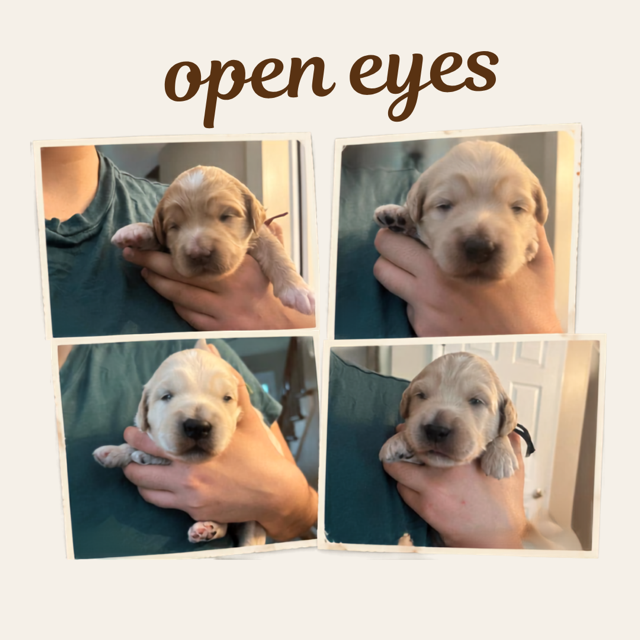
Open Eyes
Around day 9, we noticed the very first hints of the puppies’ eyes beginning to open, and now all four have their sweet eyes open! It is a gradual process, and each day we get to see more and more of their bright puppy eyes. It’s incredible how much more they look like tiny, real puppies once their eyes are clear and focused. During this stage, we take special care not to shine any bright lights into their whelping box, as their developing eyes are still very sensitive.
The opening of their eyes marks the puppies’ entry into the transitional period. They are now beginning to visually perceive the world around them and will soon start engaging in true social behaviors. In short, we are right on the cusp of watching each of their unique, sweet personalities start to shine through!
Wobbly Steps & Weight on Their Legs
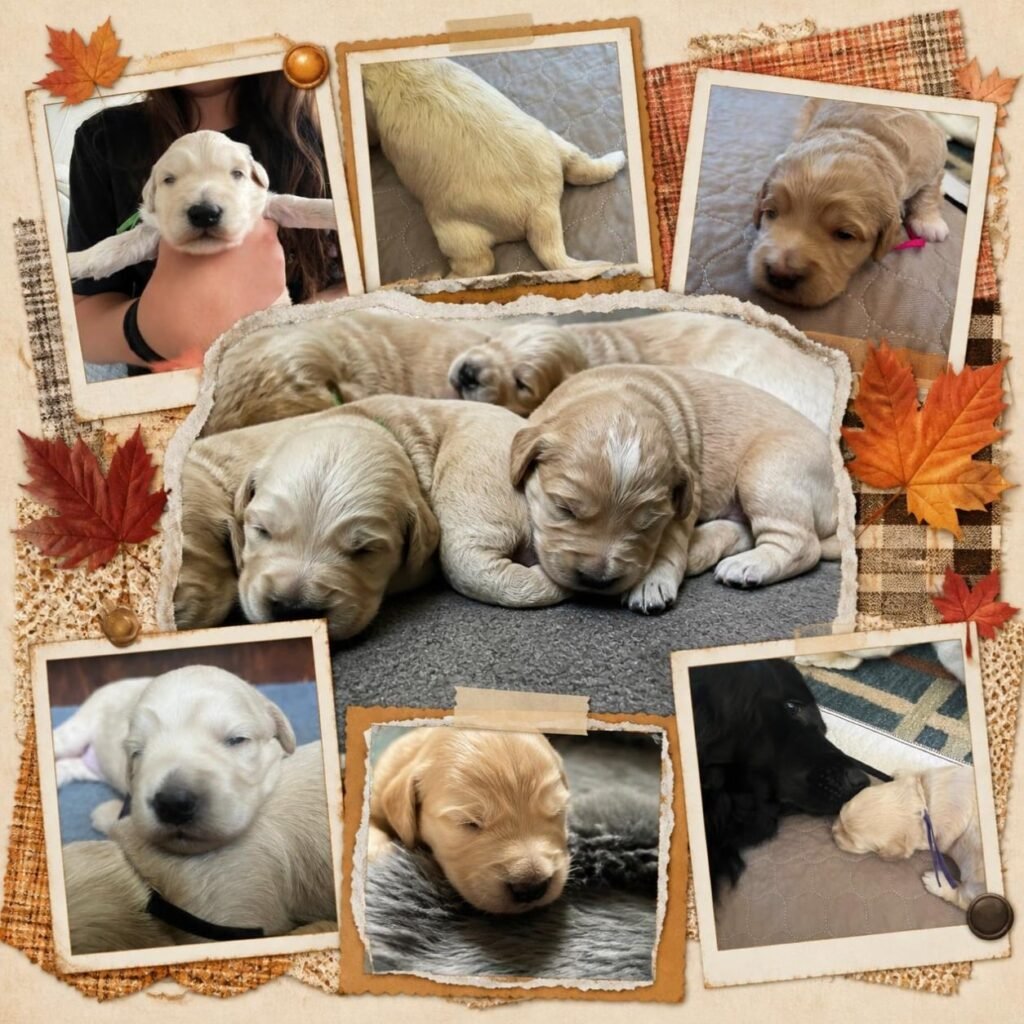
We have also had the delight of watching the puppies put weight on their legs and take their very first wobbly steps! It is absolutely adorable watching them push up off the floor, balance on those roly-poly legs, and stumble about as they figure out the mechanics of walking. They are moving around their whelping box so much more actively now!
Nail Trimming & Deworming
The puppies received their very first pedicure this week! Their sharp little puppy nails can easily scratch their littermates or mom while nursing, and long nails can even make learning to balance and walk more difficult. Moving forward, the puppies will receive frequent nail trims using baby nail clippers. Trimming their nails early and often also helps desensitize them to having their paws handled. Many adult dogs object to having their feet touched, so establishing a positive, gentle routine now makes future grooming a breeze.
We also administered their first round of deworming medication. They received Nemex-2, and all four thought it was absolute liquid gold! As a standard preventative measure (since worms are very common in young pups), we will continue to deworm them every two weeks. We will also submit a stool sample to our vet during their 6–7 week checkup to ensure every puppy is completely parasite-free before heading home.
Beginning of Socialization
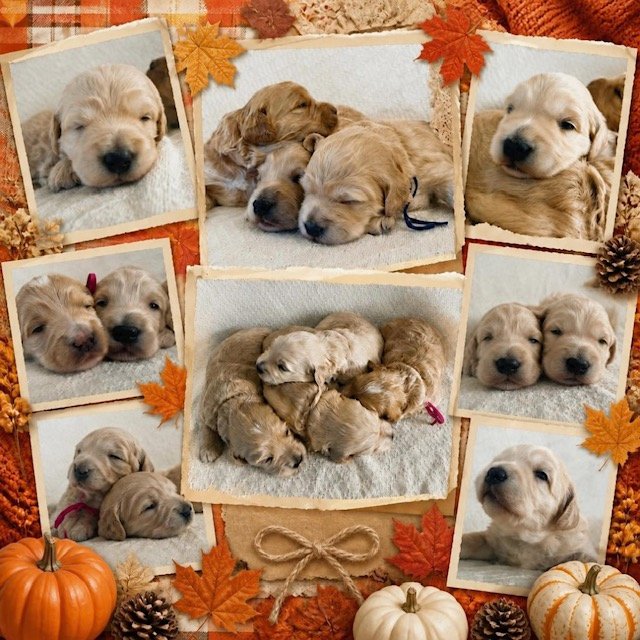
Even at this early stage, spending dedicated, gentle time with the puppies is of utmost importance. As they transition out of their ENS and ESI programs (which wrap up at Day 16), we seamlessly move into intentional early socialization. Simple everyday actions now make a lasting impression on their confidence later in life.
Now that the puppies are active and exploring their space, we have started placing novel items inside their whelping box for them to investigate—things like a clean package of wipes, an empty plastic water bottle, or a soft ball. These simple items stimulate their curiosity and foster inquisitive minds. We also introduce them to different tactile surfaces outside their padded box, like smooth tile flooring. Weather permitting, we love taking them out to our porch individually for a few seconds to catch their very first whiff of fresh country air. And, of course, our absolute favorite part: snuggling, holding, and loving on them daily! Every little interaction builds a foundation for a confident, well-adjusted dog.
Week 2 Conclusion
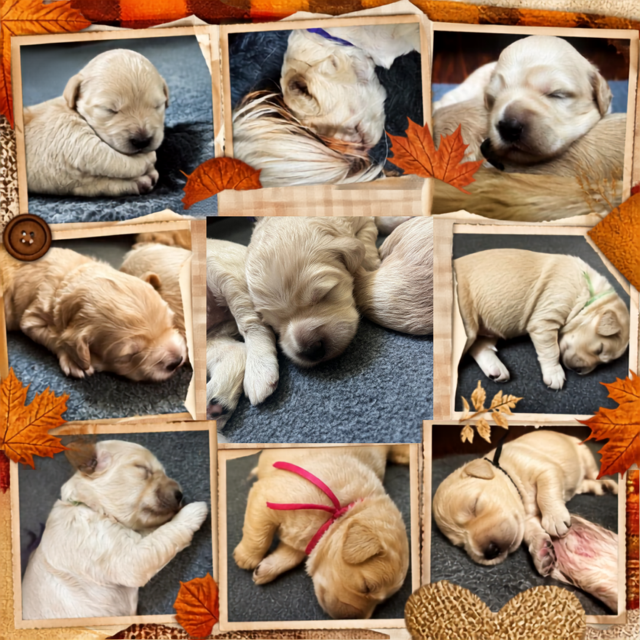
So much change in just seven days! All 4 puppies are gaining weight steadily—our ultimate reassurance that they are thriving—and Heidi continues to be an extraordinary, attentive mother. We can’t wait for next week as they begin interacting, playing, and toddling around even more! Be sure to follow along on our Instagram and Facebook pages for regular photos and video updates of the royal litter.
Preparing For Your Puppy: Puppy Socialization
Your puppy’s socialization starts right here in our home, but it’s essential that you carry the torch once they join your family! Puppies go through a critical socialization window between 3 and 16 weeks of age. Their experiences during this brief developmental stage shape their adult temperament, confidence, and behavior.
Providing positive, gentle exposures to a wide variety of sights, sounds, smells, new environments, and friendly, fully-vaccinated dogs (remembering that not all dogs enjoy puppy energy!) ensures your pup grows into a balanced, happy companion. The golden rule of puppy socialization is to keep every new interaction short, sweet, and positive.
We highly recommend enrolling in a local puppy socialization class once your pup arrives home! Here’s a checklist with ways to socialize your puppy.
Watch & Learn: Check out Baxter & Bella’s YouTube video on Socializing Your Puppy for a wonderful overview of how to structure early social outings safely.
Discount Code: If you decide to sign up for Baxter & Bella’s full online step-by-step training program, don’t forget to use our code “LandofGoshen” at checkout for 25% off!
Week One Update: The Puppies are Here!
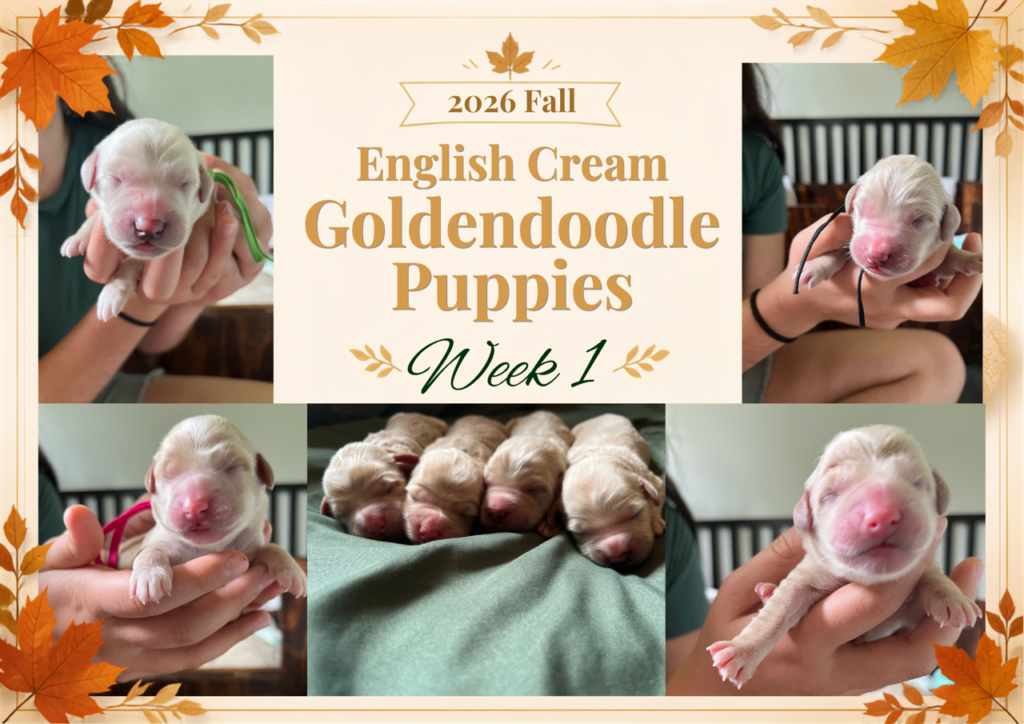
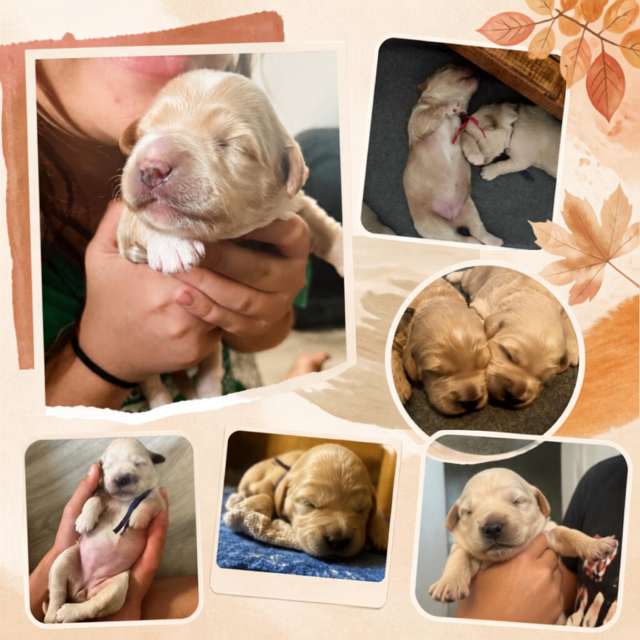
Heidi gave birth to 4 healthy puppies (2 boys & 2 girls) on Monday! The puppies were born weighing between 11.5 oz and 13 oz. All are healthy and dutifully gaining weight, which is our best indicator that they are thriving and doing well. Way to go, puppies!
Inspired by recently watching The Crown with my teenage daughters, we gave this litter royal, majestic names:
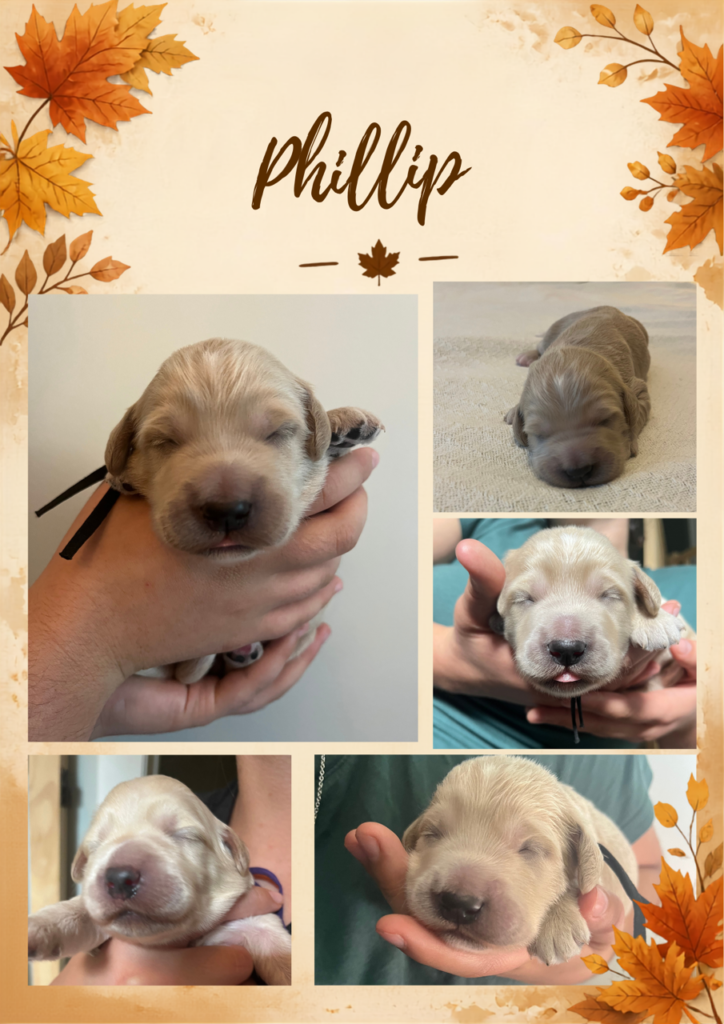
Boys: Phillip and Winston Churchill
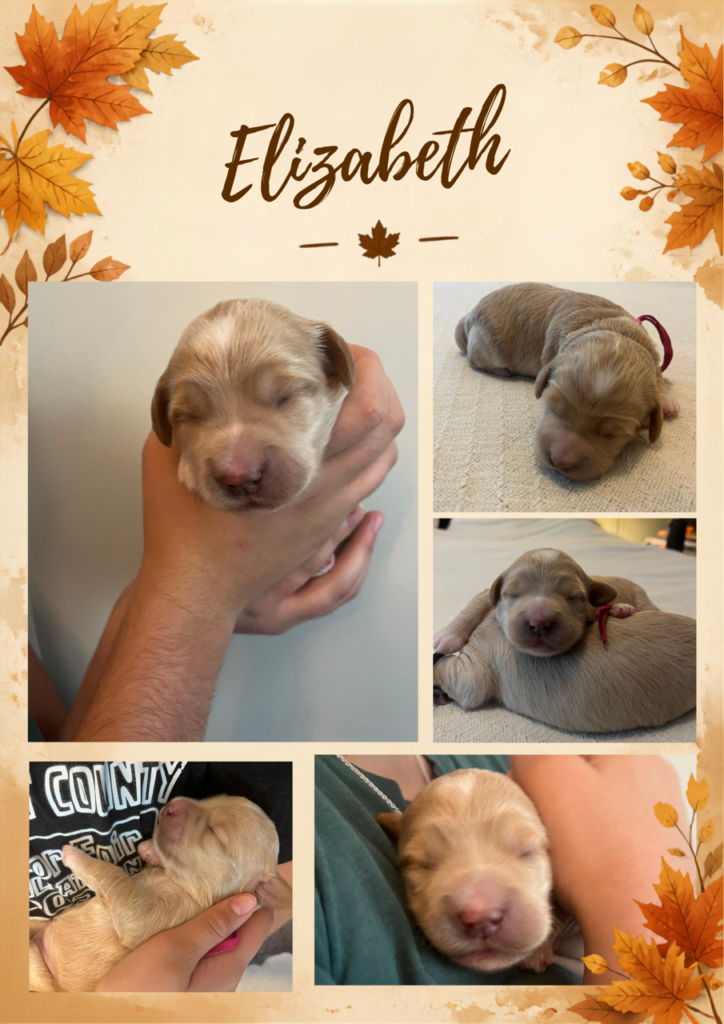
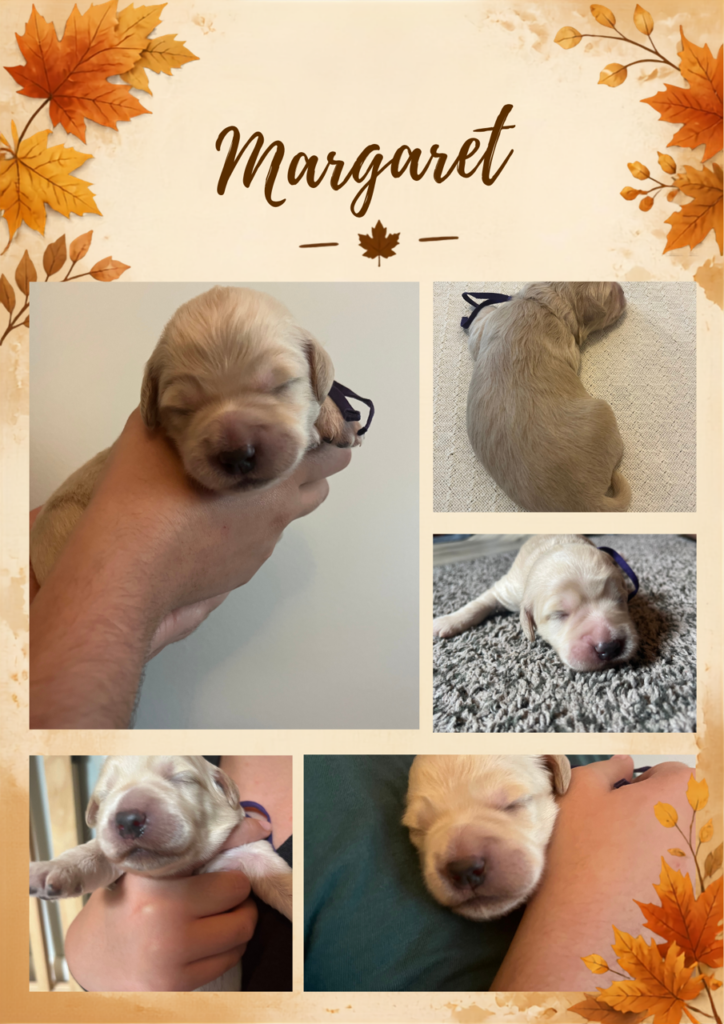
Girls: Elizabeth and Margaret
Our other dog, Ember, loves the puppies and often takes a peek in at them as they rest and grow.
Altricial vs. Precocial
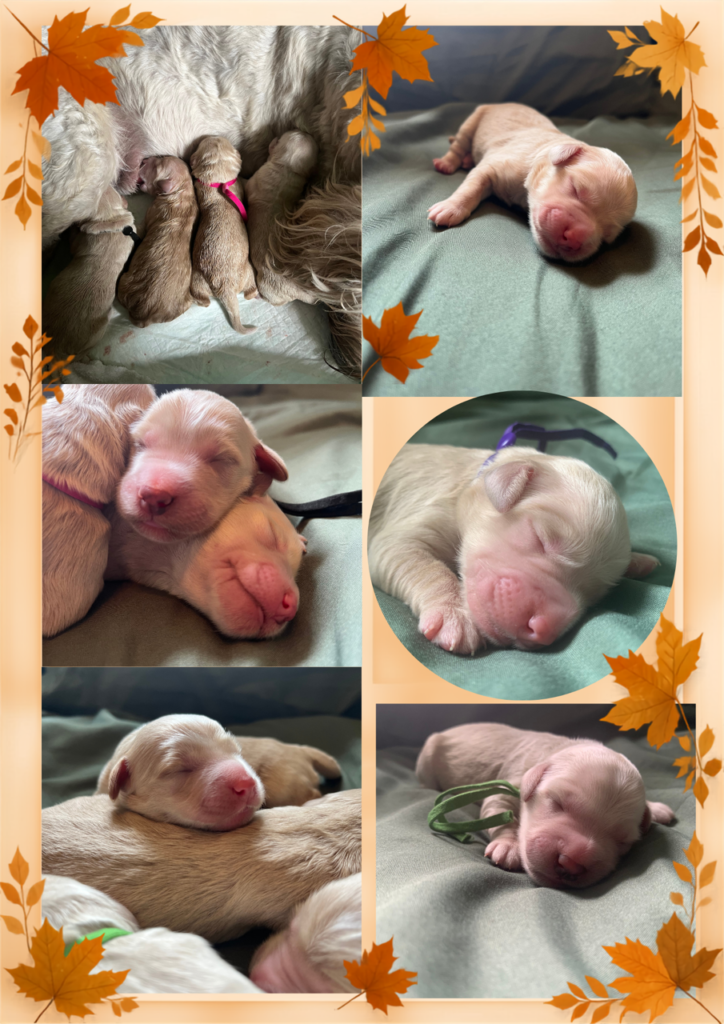
Puppies are altricial animals, meaning when they are born they are basically helpless and totally dependent on their mother. This stands in stark contrast to precocial animals who are born ready to hit the ground running.
Since we also raise Nigerian Dwarf goats here on the farm, it’s always so fun noting the contrast between the two! Our baby goat kids are up on their feet and ready to run around almost immediately after birth. Puppies, on the other hand, are unable to see, hear, walk, regulate their temperature, or even go to the bathroom on their own.
Amazingly, puppies are born with the instinct to drag themselves toward their mom and cuddle together to stay warm. It is beyond adorable watching them pull themselves toward Heidi with their little heads bobbing back and forth! Thankfully, Heidi is a fantastic mama; her natural instincts kicked in immediately, and she cares for her 4 little ones around the clock.
Activated Sleep
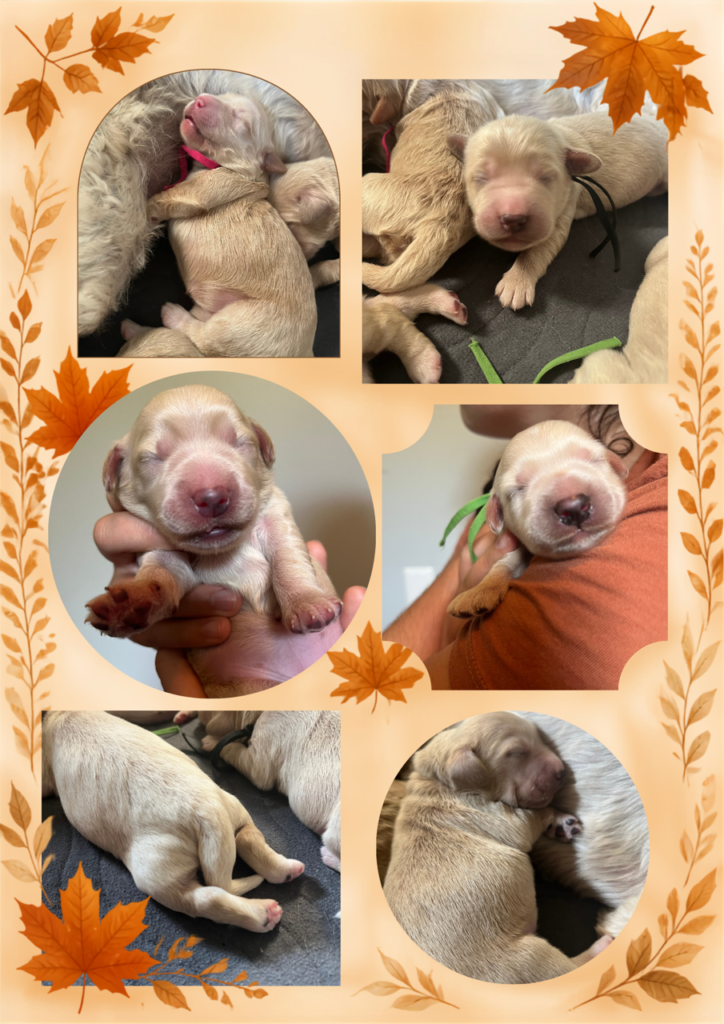
The puppies spend the vast majority of their time sleeping. As they snooze, you will see their little bodies twitch and pop. This twitching and popping is called activated sleep.
The functional purpose of activated sleep is to help build muscle tone and motor coordination. Seeing all that twitching is a wonderful sign that healthy, normal neurological and physical development is occurring!
ENS & ESI
On Day 3, we started ENS (Early Neurological Stimulation) and ESI (Early Scent Introduction):
ENS: First used by the U.S. military (and often referred to as the “Super Dog Program”), ENS involves gently introducing mild, brief stressors to a puppy daily from Day 3 to Day 16. This helps improve their cardio performance, stress tolerance, and immune system later in life.
ESI: Designed to enhance a puppy’s ability to identify and react to specific scents, boosting their nose awareness and overall confidence. It’s an exceptionally helpful program for future service and therapy dogs!
It has been my 11-year-old daughter’s job to implement ESI, and she has had a blast seeing the puppies’ varied responses to different scents. There is no right or wrong reaction, but the puppies make it very clear which scents they enjoy and which ones they don’t! When curious, they take big whiffs; when they don’t care for a scent, they flat-out refuse to smell it. Some of the scents we introduce include cinnamon sticks, dirt, cat fur, cloves, gravel, lavender, mint, and more.
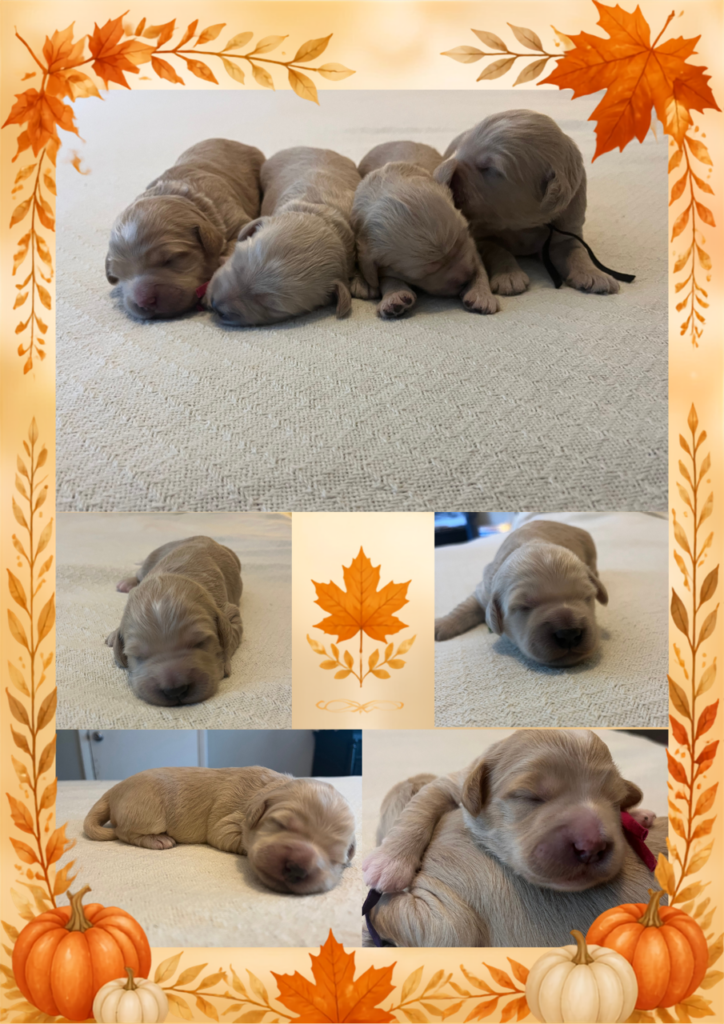
Week 1 Conclusion
We have seen so much growth and development in just seven short days! It’s incredible how much the puppies’ bodies fill out during this first week as they nurse around the clock and begin looking more like miniature puppies rather than little sausages.
We’ve already seen tiny puppy tails wag, are beginning to hear sweet little barks, and are watching them pull their roly-poly bodies up off the floor. With every litter, our amazement is renewed at how perfectly designed these puppies are to survive and how swiftly they grow. Be sure to check out our Instagram & Facebook pages for more photos and video updates!
Preparing For Your Puppy
Now is the absolute best time to start getting ready for your new family member! Doing a little research each week will help you feel fully prepared by go-home day. There are so many topics to cover: crate training, potty training, introducing your puppy to kids or other pets, and teaching bite inhibition.
We recommend starting with Baxter & Bella. They offer a wealth of free resources through their podcast and YouTube videos covering the wide spectrum of bringing home a new pup. Here is a helpful video to get you started on navigating your first 24 hours together:
Crate Training Focus
Understanding crate training is near the top of our priority list. We highly recommend crate training because it makes potty training significantly smoother and keeps your puppy safe from mischief.
Early Exposure: Long before going home, your puppy will be well-acquainted with a crate. When we move them to a larger play area around 4 weeks, we place an open crate inside. It’s astounding how naturally drawn they are to enter and rest inside it!
Overnight Practice: At 6–7 weeks, the puppies begin sleeping overnight in crates so that it feels like a familiar, safe sanctuary rather than a scary or isolating experience.
Tip: When you first bring your puppy home, keep their crate near you (like next to your bed or opt to sleep on the couch next to your puppy’s crate). Transitioning from constant littermate companionship to a brand-new environment is a big adjustment. Keeping them close prevents feelings of isolation and helps them bond with you much faster!
Note on Baxter & Bella: If you opt for their full online training membership, you can use our discount code “LandofGoshen” for 25% off. While online modules are fantastic for early preparation, remember that in-person training classes also offer unique socialization benefits once your puppy is fully vaccinated!