Heidi & Moses’ 2026 Winter Puppies

One Week Update
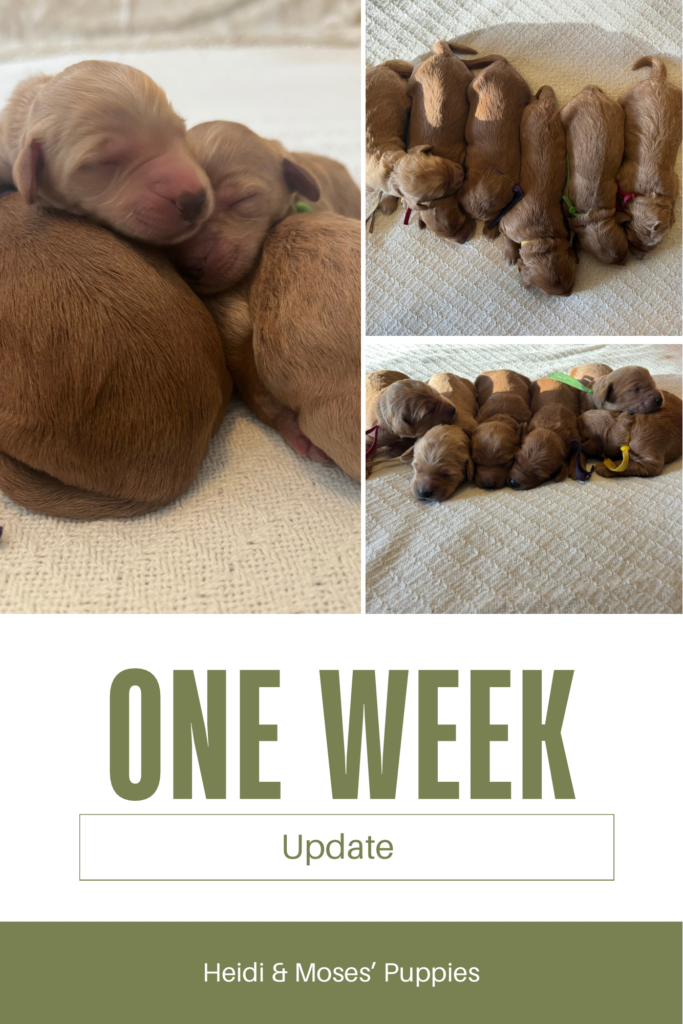
The Puppies are Here!
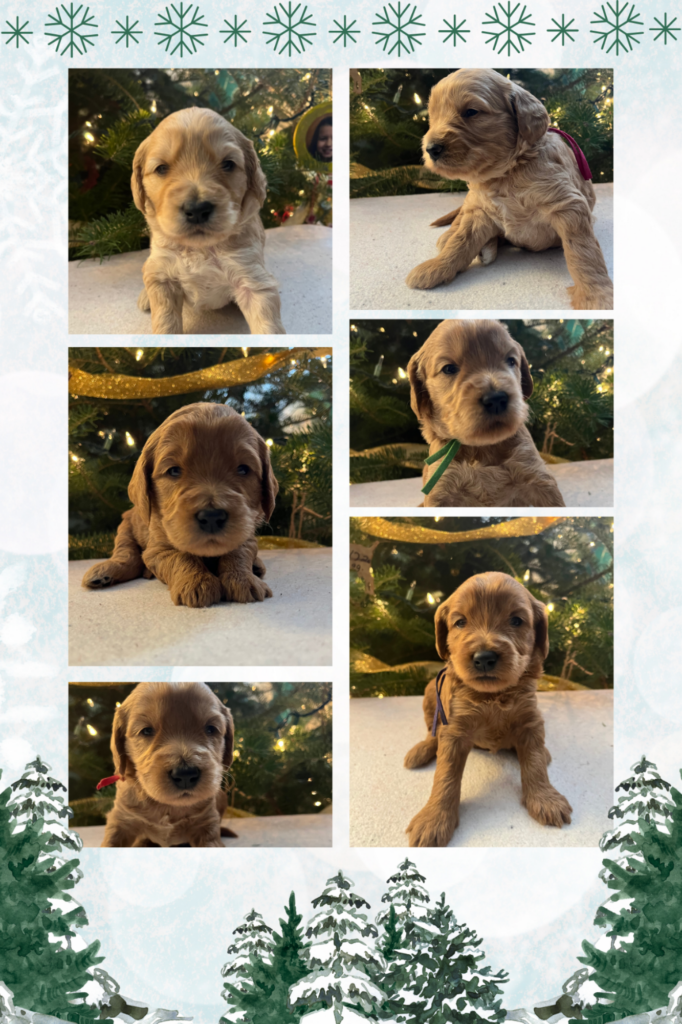
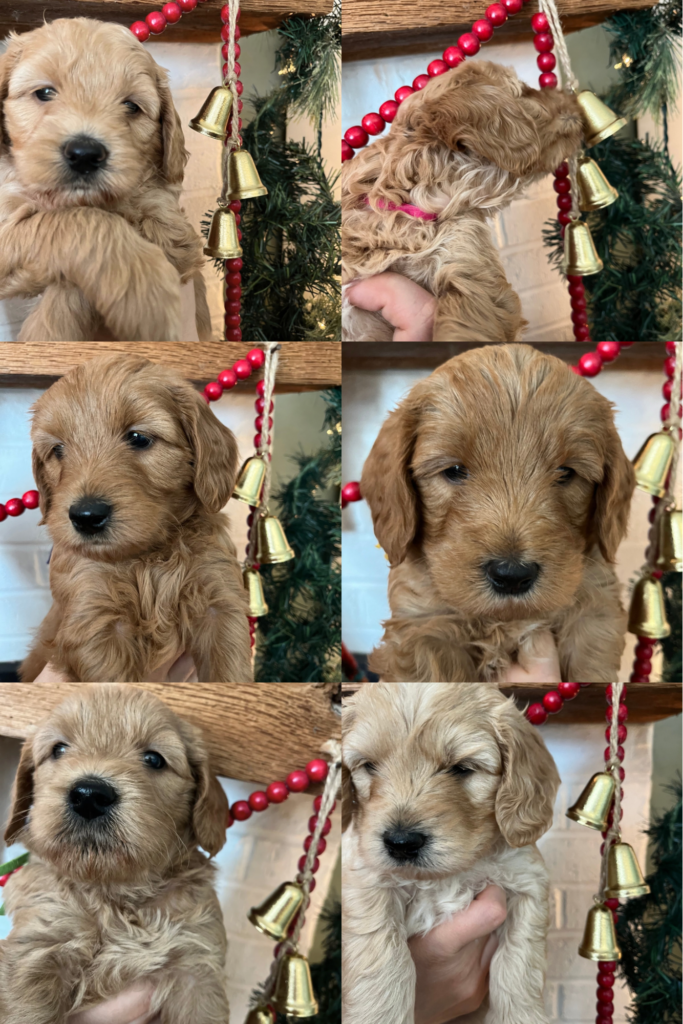
Heidi gave birth to SIX healthy puppies on Monday 11/10/25. This is her biggest litter yet! She had 4 boys & 2 girls. They all weighed between 9.5 and 11 ounces. All the puppies are dutifully gaining weight, which is an indicator to us that the puppies are healthy and doing well. Way to go puppies! Being close to Christmas time, we have given them Christmas themed names.
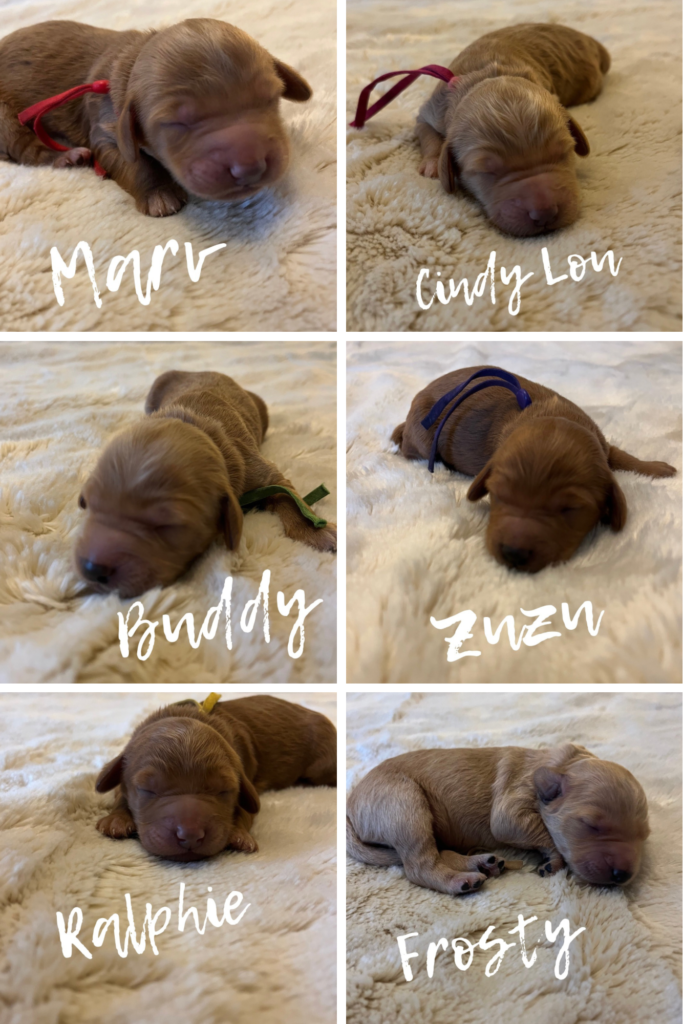
Altricial vs Precocial
Puppies are altricial animals, meaning when they are born they are basically helpless, being totally depended on their mothers (opposed to precocial animals who are born ready to go and need their mothers a bit less if at all- like goats, elephants, and more). Puppies are unable to see, hear, walk, regulate their temperature, or even go to the bathroom on their own. Amazingly, the puppies are born with instincts to be able to drag themselves to their mom & know to cuddle together and with mom to stay warm and let mom take care of them. It’s adorable watching them drag themselves towards their mama with their heads bobbing back and forth. Thankfully, Heidi is a fantastic mama & her natural instincts have kicked in and she cares for her puppies around the clock.
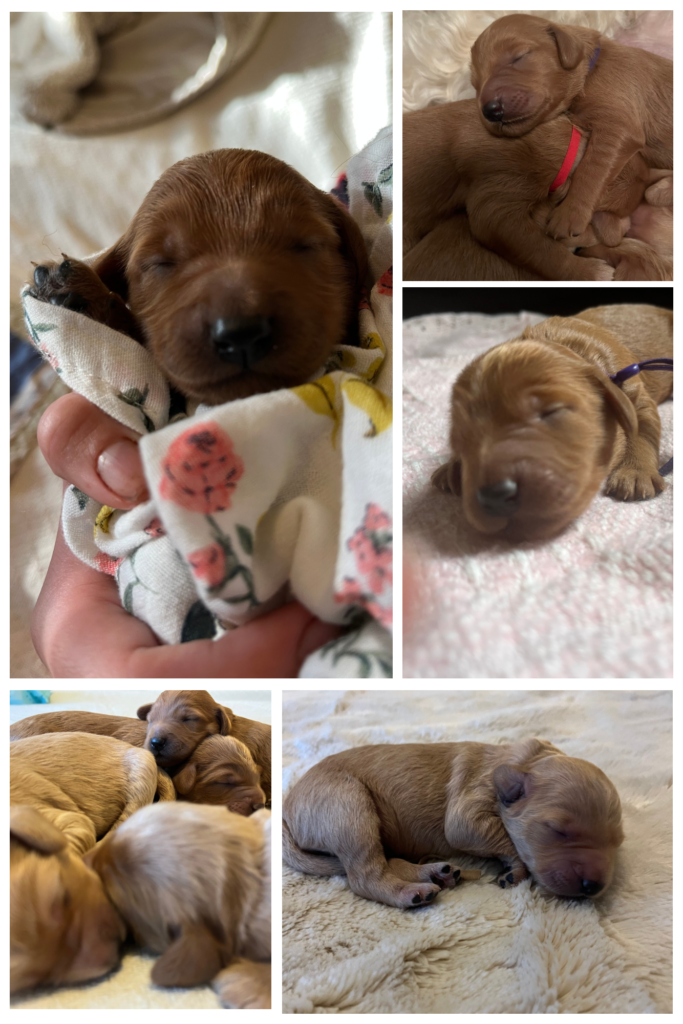
Activated Sleep
The puppies spend the majority of their time sleeping. As they sleep, you see their bodies twitch and pop. This twitching & popping is called activated sleep. The functional purpose of activated sleep is to develop muscle tone and coordination. So all this twitching & popping is an indication that healthy & normal development is occurring!
ENS & ESI
On day 3, we started ENS (Early Neurological Stimulation) and ESI (Early Scent Introduction) ENS (first used by the US military & also called the “Super Dog Program”) involves gently introducing mild stressors to a puppy for a few seconds daily from day 3 to day 16 as a way to improve their overall health a stress response later in life.
ESI was designed to enhance a puppy’s ability to react and identify specific scents. It helps puppies gain awareness with their nose and boost their confidence. It’s an especially helpful training program for service and therapy dogs. It has been my 10 year old daughter’s job to implement ESI & she has had a blast seeing the puppies’ varied responses to the different scents. There is no right or wrong response to the scents, but the puppies make it obvious which scents they enjoy and which ones they don’t! When they are curious about the scent, they take big whiffs! And when they don’t care for them, they will flat out refuse to smell them, and each individual puppy has a different response. Some scents that we expose the puppies to are cinnamon sticks, dirt, cat fur, cloves, gravel, lavender, mint, and more.
Week 1 Conclusion
We have seen so much growth and development this last week. And this is just the beginning! It’s incredible how much the puppies’ bodies fill out the first week as they nurse around the clock & begin looking more and more like little puppies rather than little sausages! We have seen little puppy tails wag, are beginning to hear sweet little barks, and watch the puppies begin to pull their roly-poly bodies up off the floor. With every litter, our amazement is renewed on how perfectly these little puppies were designed to be able to survive and just how swiftly they grow. Be sure to check out our IG & FB account for more pics and videos.
Preparing For Your Puppy
Now is the best time to start getting ready for your new puppy! If you start doing your research little by little each week, you will be well on your way for being prepared for your new puppy. There are so many things to prepare for: Crate training, potty training, introducing your puppy to kids or other pets, how to teach your puppy to not bite– and the list goes on! The first place I recommend that you start is by listening to Baxter & Bella’s podcast & watching their YouTube videos. The cover a wide range of topics, all related to bringing home a puppy and training your puppy. Here’s a video about navigating your first 24 hours with your new puppy.
Crate Training
One aspect that I consider high on the priority list for preparing for a new puppy is understanding crate training. I highly recommend crate training your puppy. Crate training makes potty training and keeping your puppy safe & out of mischief much easier. Before your puppy comes home, he will be acquainted with a crate and will view the crate a safe place to rest. When I move the puppies to a larger area at around 4 weeks, there will be a crate that the puppies will be able to check out and explore in their area. I fasten the crate door to stay open, and it’s astounding how the puppies are naturally drawn to the crate to use as a resting place. At 6-7 weeks the puppies will begin to sleep overnight in a crate. Needless to say, a crate will not feel like a scary or isolating thing for your puppy when they go home but rather a comfortable & safe place. I would also recommend that you keep your puppy near you when they are in their crate when they first come home. This will help your puppy have a better association with the crate at your house and will prevent your puppy from feeling isolated. It’s a hard adjustment for a puppy to have constant companionship with their littermates to going to a new home where everything is unfamiliar. While your puppy is adjusting to his new life with his new family, be sure to be mindful that your puppy isn’t used to being all on his own and will immensely benefit from your presence & bond to you more quickly if you prioritize keeping him near you.
Baxter & Bella is an online training school. You can utilize a lot of their information free through their podcast and YouTube videos. If you do decide to get their full online membership, you can use the discount code “LandofGoshen” to get 25% off. While I do find their program beneficial, especially as it allows you to start training your puppy early, in person training has far more better outcomes & benefits than online training (if you were to have to pick between the two).
Here’s a Bella & Baxter Video on Crate training. Here’s another more in depth video as well.
Two Week Update

2 Weeks!
From open eyes, wobbly steps, pink noses turning black, & lots of chunking up- what a big week it has been for Heidi’s puppies! The pups are still doing plenty of sleeping and eating, and it shows with how much weight they have gain and how much they are developing! It’s astounding how much puppies grow each week.
Open Eyes
On day 9, we noticed a few of the puppies’ eyes beginning to open, and now they all have open eyes. It’s a gradual process & each day we are seeing more and more of their sweet little puppy eyes! It’s incredible how much more they look like miniature puppies once you can see their eyes. We have to take special care not to shine any bright lights into their faces as their eyes are more sensitive as they are opening.
The opening of eyes means that Heidi’s puppies are entering into the transitional period & will begin to be able to perceive the world around them and we will begin to see them engaging in social behaviors. In short, we will start to see more and more of each of their unique personalities.
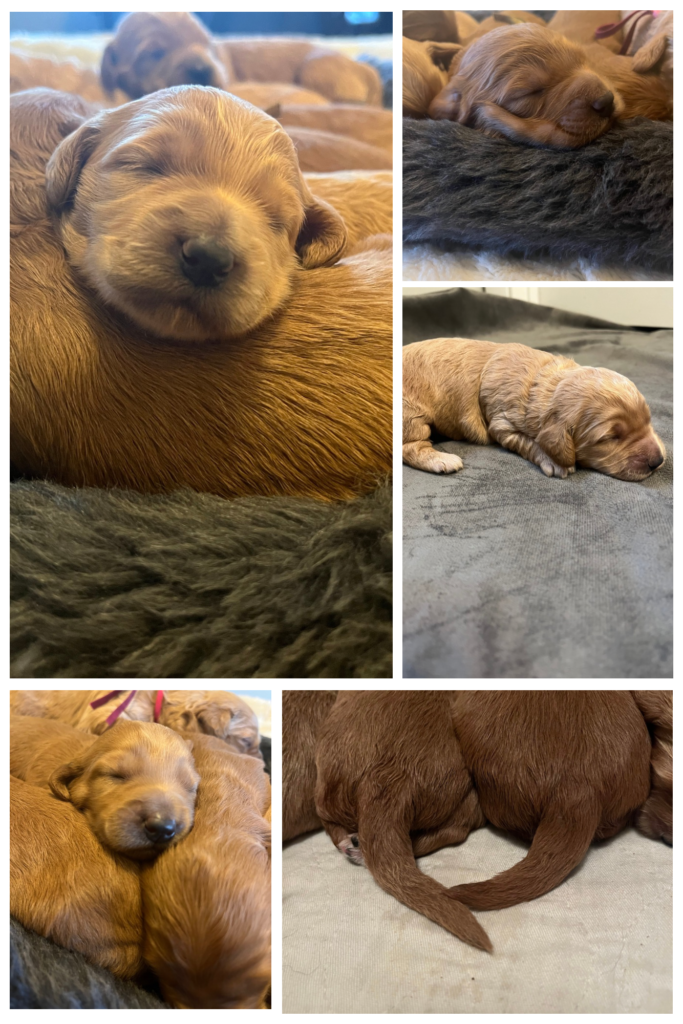
Wobbly Steps
We have also witnessed the puppies taking wobbly steps! It is so cute and comical watching them stumble about as they are learning the ins and outs on how to walk.
Nail Trimming & Deworming
The puppies received their first pedicure this week. Their long nails can be a hazard to each other and their mama, and even can make learning to walk more difficult. So, the puppies will receive frequent nail clippings with a baby nail clipper. Frequent nail clippings also helps to desensitize them from having their paws and nails handled. Many dogs object to having their paws touched making clipping your dog’s nails challenging, so it’s best to start young with touching your dog’s paws and clipping their nails. We will have more on body handling in another blog post.
We also gave the puppies their first round of deworming meds. They were given Nemex 2 and they thought its was delicious. We will continue to deworm them every 2 weeks as precaution (as it is common for puppies to have worms) & will submit a stool sample to our vet at their visit when they are 6-7 weeks old, to ensure the puppies are parasite free when they go to their new homes.

Beginning of Socialization
Even now, it’s of upmost importance that we interact and spend time with the puppies. As they enter into the transitional period & phase out of ENS and ESI (at day 16) we are intentional with the puppies and begin their socialization process. Many of the things we do are quite simple, yet will have a lasting impact on the puppies. Now that the puppies are starting to move around in their whelping box, we will start placing items in their box for them to investigate. Items such as a package of wipes, a plastic water bottle, a ball, and many more things are viewed as a novelty to the puppies and will assist in developing their inquisitive minds. We put them on different types of surfaces (like a tiled floor) so they can experience how that feels since they have only been on padding in their whelping box. Weather depending, we hope to take them individually on our porch to get their first breath of fresh air (only for a few seconds). And of course we must hold and love on the puppies- our favorite part! All these little things add up to help develop puppies who will grow to be confident dogs. I will continue to share more about the importance of socialization and the different ways that we begin the socialization process over the next month and half that the puppies are with us.
Week 2 Conclusion
So much change in just one week! And just wait, the puppies will change even more so next week! All the puppies continue to gain weight (our biggest indication that they are thriving) & Heidi is doing a splendid job caring for all 6 of her puppies! I can’t wait to see them start running around and interacting with each other more!

Preparing for Your Puppy
Puppy Socialization
Your puppy’s socialization will start in my home and it’s essential that it is carried on by you. Puppies have what is called “critical socialization period” between 3-16 weeks of age. The puppy’s experiences during this period of learning and development can influence and shape their temperament and behavior as an adult. Providing plenty of opportunities to introduce your puppy to many new sights, sounds, smells, people, places, experiences, and to super friendly, healthy, and vaccinated dogs & animals (keep in mind, there are many friendly dogs who don’t enjoy puppies)–will ensure your puppy will grow into a well adjusted sociable dog. It is of utmost importance to keep each interaction short, sweet, and positive. It’s a big responsibility but one that can be fun & will certainly be impactful! I highly recommend that you look into puppy socialization classes, and here’s a checklist on different ways to socialize your puppy.
Here’s a Baxter & Bella YouTube video on socializing your puppy:
Three Week Update

3 Weeks!
Heidi’s puppies are 3 weeks! It has been another big week full of big milestones and growth. Their eyes are opening more, they are starting to be able to hear, and are becoming more social!

Open Eyes – Hearing- Playing
Each day, the puppies’ eyes have been opening more and more. At this point, they are nearly all the way open and it’s beyond sweet seeing them being able to see and focus on the world around them, including us!
We have also notice that the puppies are starting to be able to hear. With that, we now have periods that we play classical music for them during the day. Just as classical music is beneficial for babies’ developing minds, it is also good for puppies! Furthermore, we are starting to play desensitizing noises for the puppies. We have a playlist of common noises that can be startling and stressful for dogs so that our puppies will go to their new homes familiarized with we these noises and be less frightened to them. Some noises include- a baby crying, sires, fireworks, thunderstorms, car noises, and more.
The puppies’ wobbly steps aren’t nearly so wobbly any more! While there is still plenty of stumbles, the puppies can get around! There is a lot of playing and exploring in their whelping box! They are nearly ready for a bigger area!

Week Three Conclusion
Heidi’s puppies are entering into what we refer to as the “fun stage!” It’s now time that we start ramping up our efforts to ensure the puppies are well socialized before going to their new homes. Each day we are intentional to make sure the pups have new experiences. We are hoping that we will have a day that is warm and dry enough for us to briefly take Heidi’s puppies outside the next week or so. Their first taste of goat milk & a move to a bigger area is also in the works for next week.

Preparing for Your Puppy
Finding a vet
Now is a good time to find a vet. Your puppy will be vet checked, receive their first set of vaccinations, have a stool sampled checked, and be microchipped by Dr. Baum at Hopewell Animal Hospital at 6-7weeks old. They will be ready for their 2nd rounds of vaccinations 2-4 weeks after their initial appointment. Some vets prefer to see new pets within a few days after you bring them home, so be sure to call your vet and see what they recommend. Also, it’s a good idea to bring treats to give your pup to make sure the vet visit is a positive experience for your puppy!
Bonding
Bonding with your puppy right away is just as pivotal as socializing your puppy. In fact, bonding with your dog comes before training her. Having a strong bond with your puppy will ensure your dog feels comfortable and safe around you, which will make training easier. Over time and with some effort, your bond with your pup will become unbreakable and help you to enjoy your dog to the fullest.
Bonding starts right when you bring your puppy home. As you drive home, petting your pup and talking to her in a soothing voice to reassure her will go a long way with getting her to adjust & trust you. Setting up routines for your puppy will also contribute to her bonding with you as puppies like to know what to expect. Feeding, training, cuddling, playing and grooming/handling are all part of bonding with your dog.
Here are a few tips I have learned to quickly establish a bond:
- Have someone on the car ride home who can devote all their attention on the puppy.
- Establish the area you want your puppy to go potty and take them there every 30 minutes while they are awake and out of their crate (this could be more often at first).
- Be sure to give the puppy space when you get home (let her nap when she wants and let her approach you more than you reach out to grab her). It’s important to stay close to her, but it can be overwhelming if a lot of people are surrounding her and if she is constantly being held and hugged.
- Play with your puppy. Be careful to always use toys when playing with puppies. Puppies bite when playing, so you want them to be biting on toys and not your fingers! Be careful to have your kids not play games to have your puppy chase them. This could lead to the puppy becoming overly excited and jumping on & nipping them.
- Let your puppy sleep near you at first. Your puppy is used to having her litter mates and will find it very scary sleeping if she has no one near him as she sleeps. I find putting the crate on my nightstand the first few nights helps me and the puppy to sleep better (If I know my puppy doesn’t need to go potty when she whines, I just put my hand on the crate and that helps her to settle) and helps the puppy to feel very attached to you. You could even plan to sleep on the couch next to her crate the first few nights.
- Sit on the floor next to your puppy.
- Take naps with your puppy (my favorite bonding activity!).
- Be easy on yourself and your puppy the first few months. It takes time to settle into new routines, potty training, etc. Patience and consistency are key.
- Redirect your puppy rather than scold her. And remember, puppies who are getting into a lot of mischief & aren’t responding to being redirected, generally are tired puppies who need to nap!
- Utilize food. Whether feeding your puppy her regular meal or using treats to train, food is a sure way to a dog’s heart. Training with treats is also a great way to redirect your dog. Be careful to introduce new treats slowly to puppies to make sure it doesn’t upset their tummies.
- Take time to fully enjoy your puppy. Life gets busy or maybe we start to focus more on training our puppy than actually enjoying her, and as a result we neglect giving her the affection she needs. Dogs are such social creatures and need your love and attention to thrive.
Here’s a video from Timberidge Goldendoodles on bonding & body handling activities to do with your puppy.
Just like socializing your puppy, bonding with your puppy will continue throughout her whole life. It’s important to remember when the new puppy stage wears off & you’re in the thick of training & you find yourself feeling frustrated, to take a step back and work on bonding for the day instead. It will make training the next day go so much smoother the next day!
Here’s a video from Baxter & Bella on bonding with your puppy.
Four Week Update
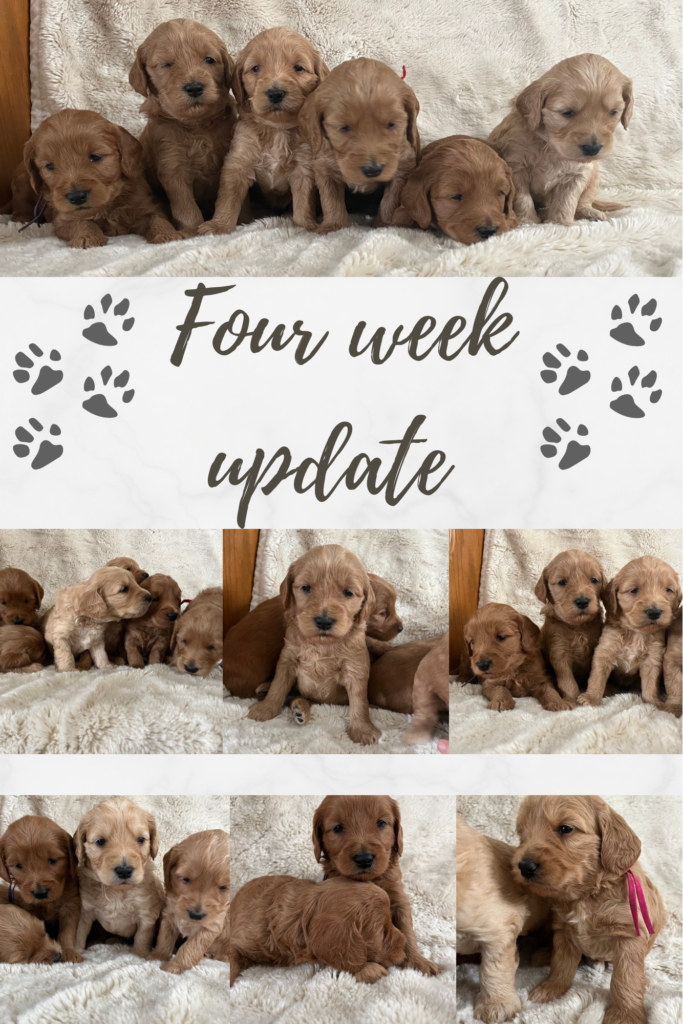
4 Weeks!
It’s hard to believe that Heidi’s puppies are now one month old! In just 4 short weeks, they will be ready to go home with their new families. It’s always so surprising how quickly puppies grow!
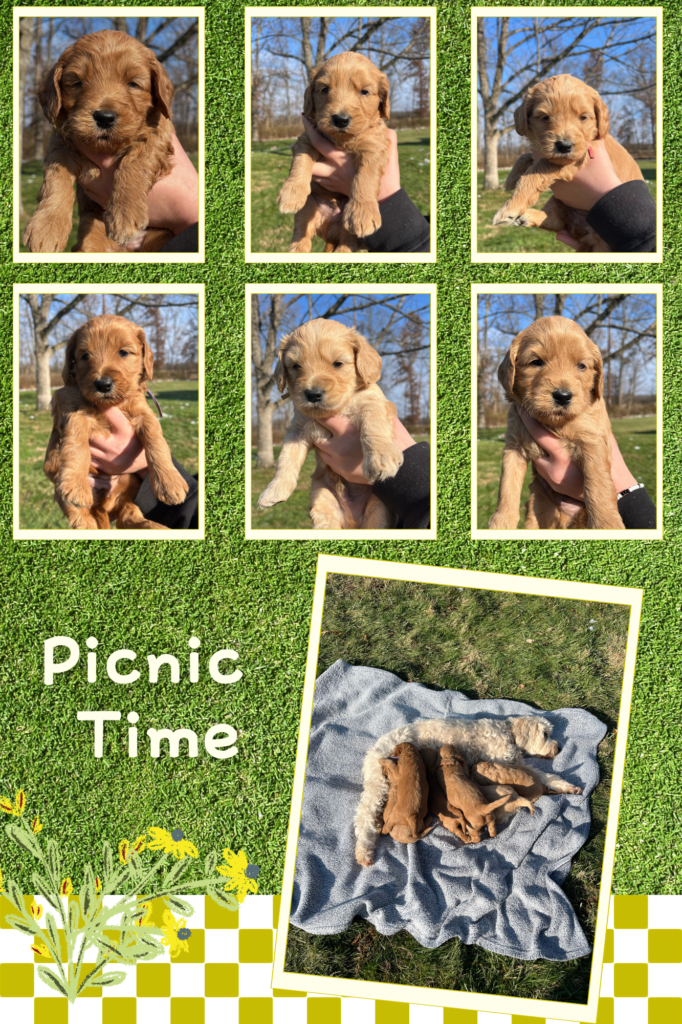
Yet again, the puppies have had a big week! They have become much more social, they eat a kibble- goat milk gruel twice a day, had a picnic outside, and their living space moved downstairs!
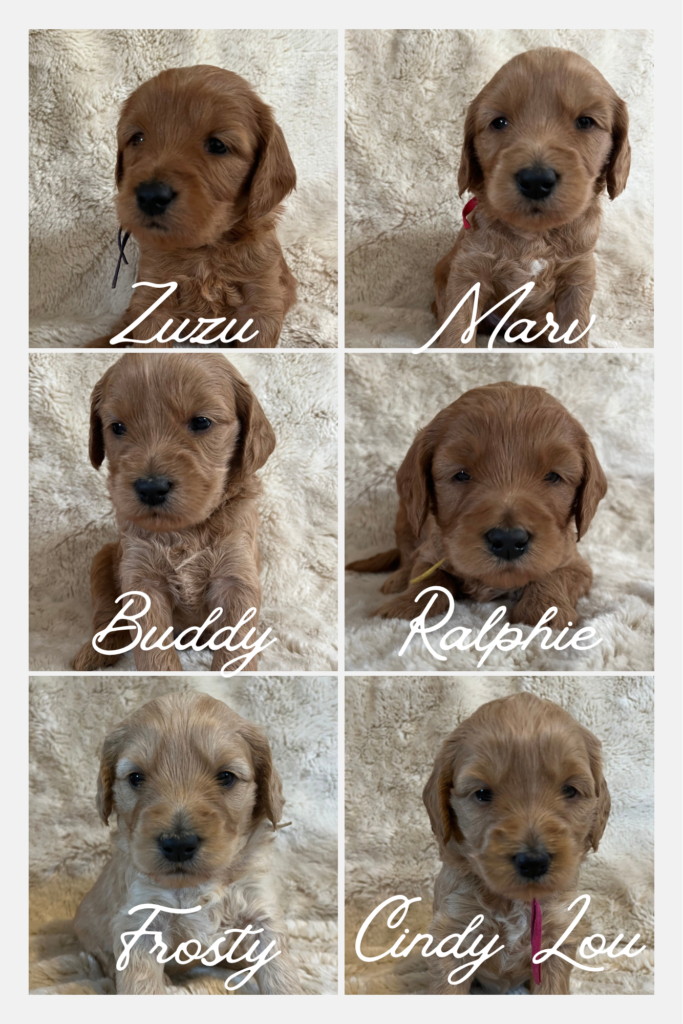
Becoming More Social
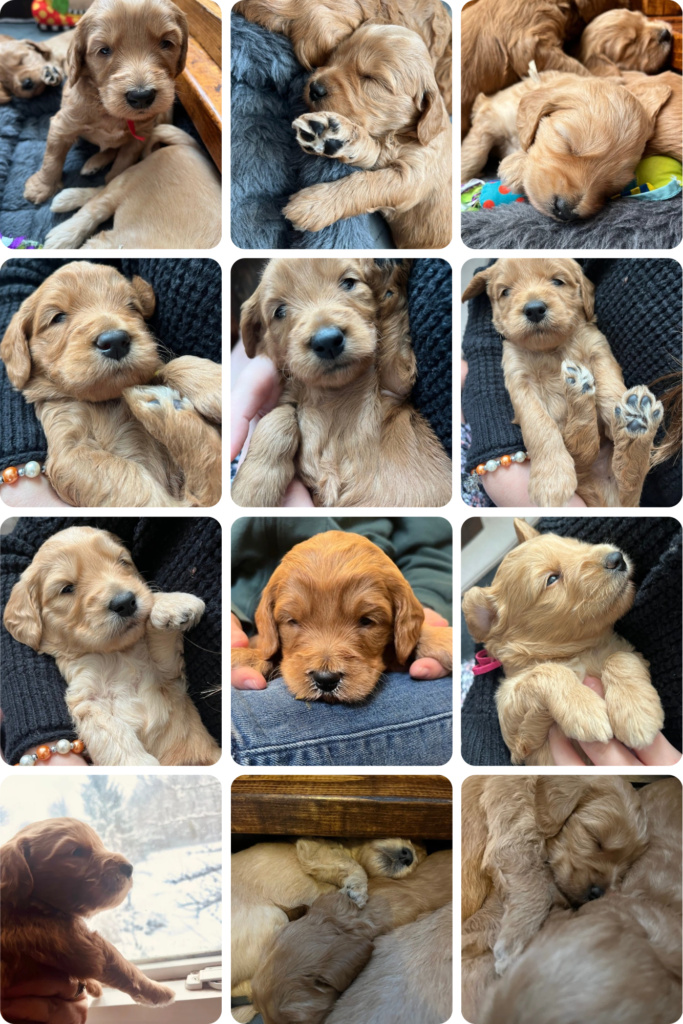
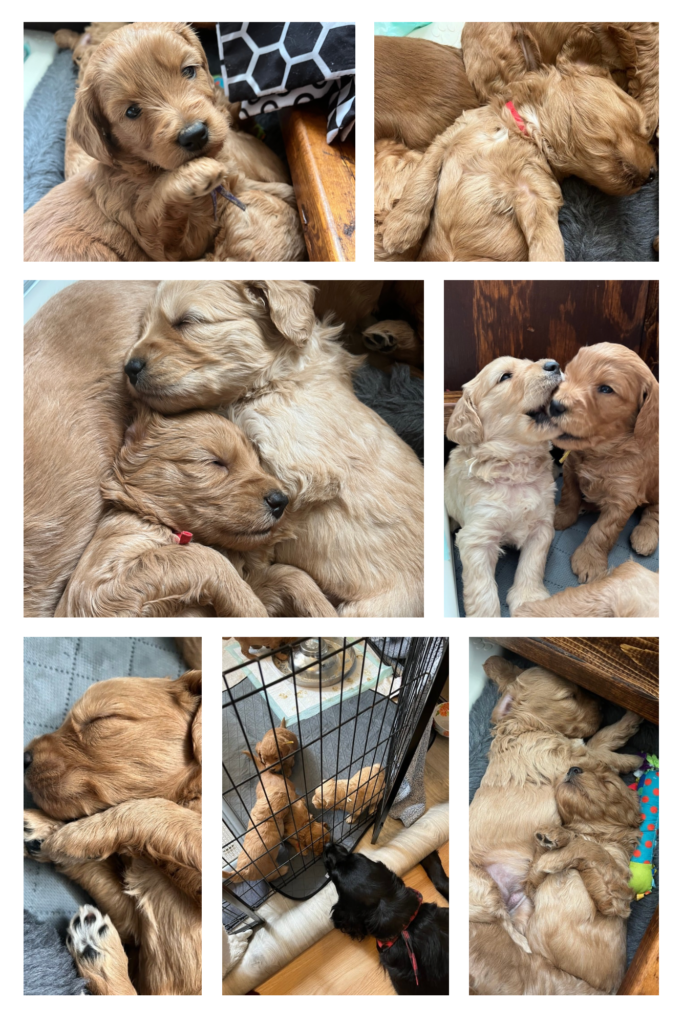
Just this week, we are beginning to see more and more of the puppies’ personalities. They love being held and pet, and crawl into our laps, and even give us frequent kisses. Belly rubs are their new favorite activity! In addition, they are curious about their new friend, our retriever Ember, & everything else they encounter.
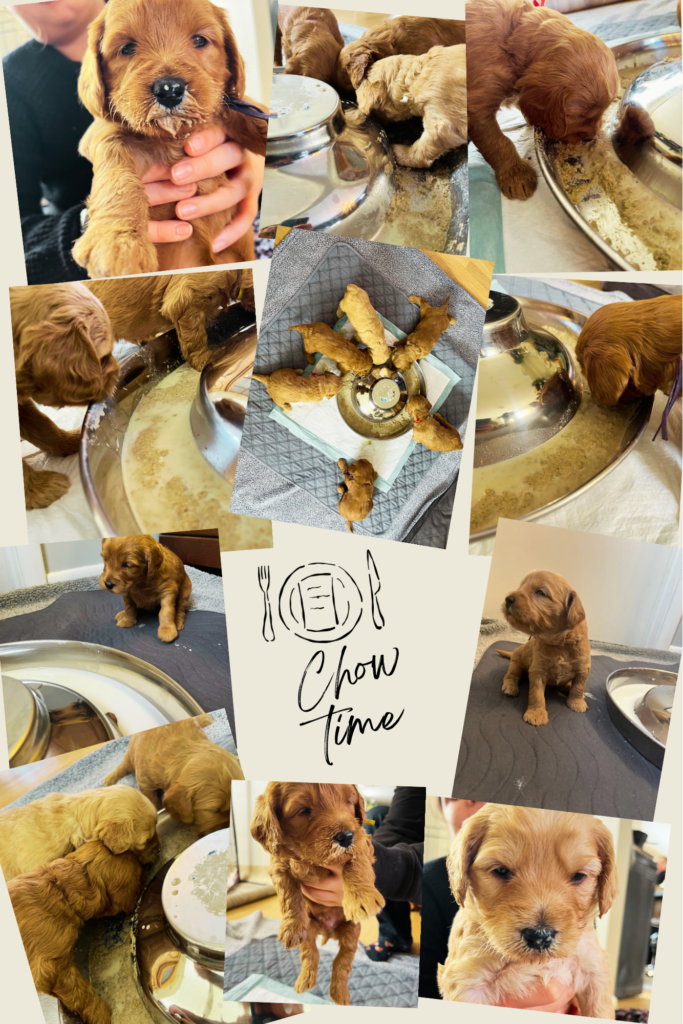
Eating
These puppies love to eat! Mom is still feeding them frequently, but they all get excited when they get their kibble mixed with goat milk twice a day. The puppies can’t seem to avoid stepping into the food and dipping their whole faces in it! It’s a messy affair! But, we especially love seeing the puppies diligently lick the food off of each other when the mealtime is over. We have noticed the puppies’ teeth are beginning to come in, so we are going to start adding in more solid kibble to their gruel. This week, we will start giving them their meals three times a day as we prepare for Heidi to start weaning.
First Picnic
The weather warmed up & the sun came out making the weather perfect for the puppies’ first outing. All the puppies were more curious than nervous, but we were sure to make it a positive experience by having Heidi feed them outside- hence their 1st picnic! As weather permits, we will continue to take them outside for brief periods to get them used to going potty outside.
The Big Move
This week we set up the puppies’ downstairs area. To make the transition easier, we moved the whole whelping box downstairs within the pen. Our plan is to take the whelping box out this week to allow for more room. It’s been precious seeing the puppies run and play in more space. While having a dim quiet area is important when the puppies are first born, it’s important that as soon as they begin being more active and social that they be included in the hustle and bustle of our home. Being downstairs allows them to get more social interaction & normalizes sounds, smells, and such of a home. Our retriever Ember is thrilled to be able to see the puppies all day!
Week Four Conclusion
Eating solid food, going outside, and moving downstairs- what a HUGE week for these puppies! They also has their 2nd dose of Nemex 2 to ensure our puppies stay parasite free. It’s a honor to witness and play a role in the puppies’ growth and development & I can’t wait to see how much progress they make this week!
Preparing For your Puppy
Dog Food
Have you thought about what dog food you will use for your puppy? Your puppy will go home with a large baggie of the kibble we will be using TLC puppy food . You will want to order that food for your puppy or the food you plan to switch your puppy to. If you plan to use a different type of food, be sure you slowly switch your puppy to their new food. Also, be sure to avoid brands that have more than one legume or lentil in the ingredients. Meat is largely water and needs to be dehydrated to be made into dry kibble. In order for kibble to maintain a nice shape and stick together, a binder is needed. Generally, grains are used for binders, but in some foods (especially grain-free foods), legumes and lentils are used to hold the kibble together. Dog food companies are aware that pet owners want to see “meat” as the first ingredient, so they do what’s called ingredient splitting. Peas or other legumes will be broken down into various parts on the ingredient list (i.e. pea protein, pea flour, pea fiber) so that they seem like a minor ingredient when in reality legumes & lentils are actually a weightier part of the kibble recipe. Various research studies have linked this regular consumption of legumes & lentils to a heart condition called dilated cardiac myelopathy (DCM for short). Please carefully choose your puppy’s food, making sure that legumes are a very minor portion of the ingredients.
Here are other suggestions of things you will need to get for your puppy my website.
Preparing your home
Puppy proofing your home is a lot like baby proofing your home. Your puppy will chew on things! Be sure to make sure you put away all things you don’t want your puppy to chew on & have things handy to give your puppy when they are chewing on things like your furniture. We have found calmly saying, “No” and giving our puppies something else suitable to chew on has been all that is needed to teach puppies not to chew on our things. It just requires lots of watching your puppy and plenty of patience! If your puppy finds a stray sock or something else, never chase your puppy to get the item from them. Get a tasty treat or a toy they can’t resist and simply swap them. More often than not, the puppy is more than willing to make the trade. Chasing a puppy around to get the item makes it a really fun game that they will purposely want to recreate. Furthermore, limiting the space your puppy is able to access helps prevent them from getting into mischief and makes potty training easier.
Baxter and Bella have a podcast that covers nearly everything to get you ready for your new puppy and beyond. Some topics include the first 3 days with your puppy, puppies with babies, introducing your puppy to household pets, puppies and kids, potty training, crate training, and so much more. Be sure to check it out! All of the episodes are kept short and to the point.
Five Week Update

5 Weeks!
The puppies are more than halfway there to going home to their furever families! This week they are becoming more curious and social, have worked on positive associations with their crate, and had some exposure to going potty outside. A
A Whole New World
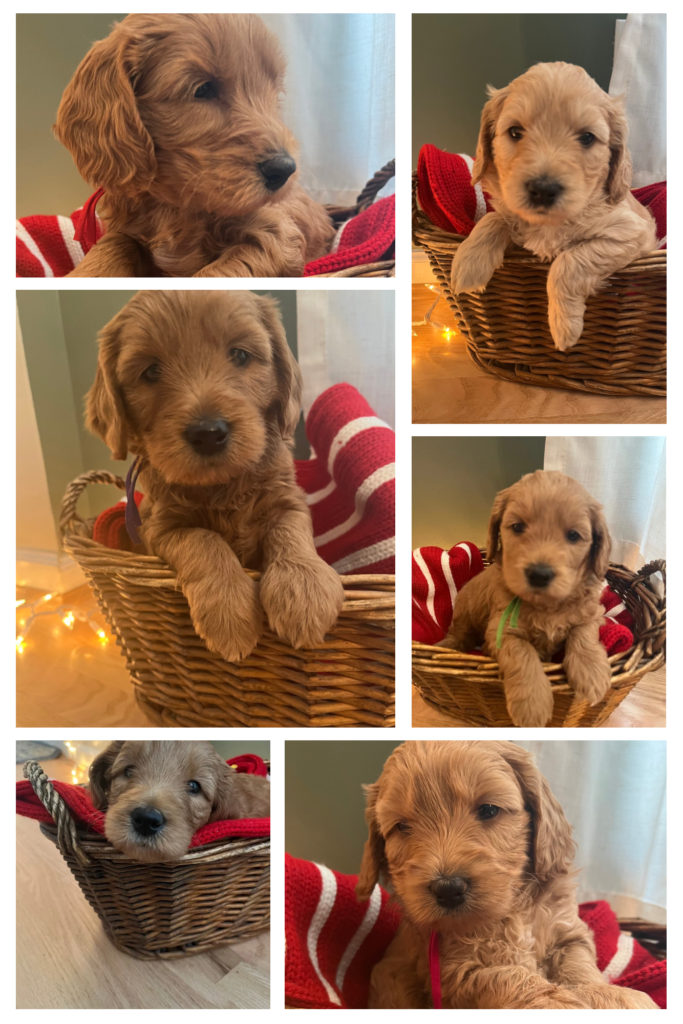
Each week the puppies are becoming more social. They thoroughly enjoy human company now. When we are near they pen (which being close to our kitchen is often!), they become alert hoping that we will come by and see them. Some will even jump up on the fencing and whine to get our attention! Needless to say, we can’t help but to give them attention! But before we pet them or interact with them we will patiently wait until they stop jumping or whining. Even now, the puppies need to learn that to get attention they need to be calm and seated. Jumping may not seem like a big deal when puppies are young, but if you don’t begin teaching your pup early on that jumping to get attention doesn’t work, it will be a hard habit to break! It’s incredible how quickly even 5 week old puppies can learn!
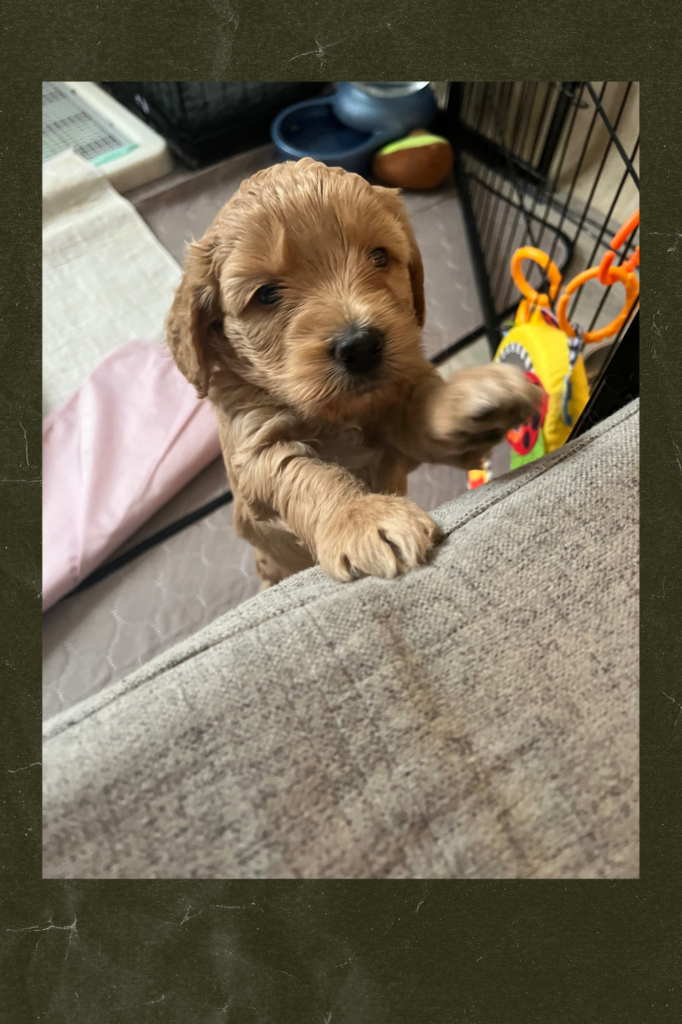
We also introduce the puppies to a new “novelty” object everyday. For example, I will put an unusual toy in their area, or a toddler chair they can hide under, or sit-n-spin. Even the water bowl I recently put into their pen was a “novelty” item for them to explore! It’s so fun seeing how curious the puppies are when they see new items & watching them find ways to play with them.
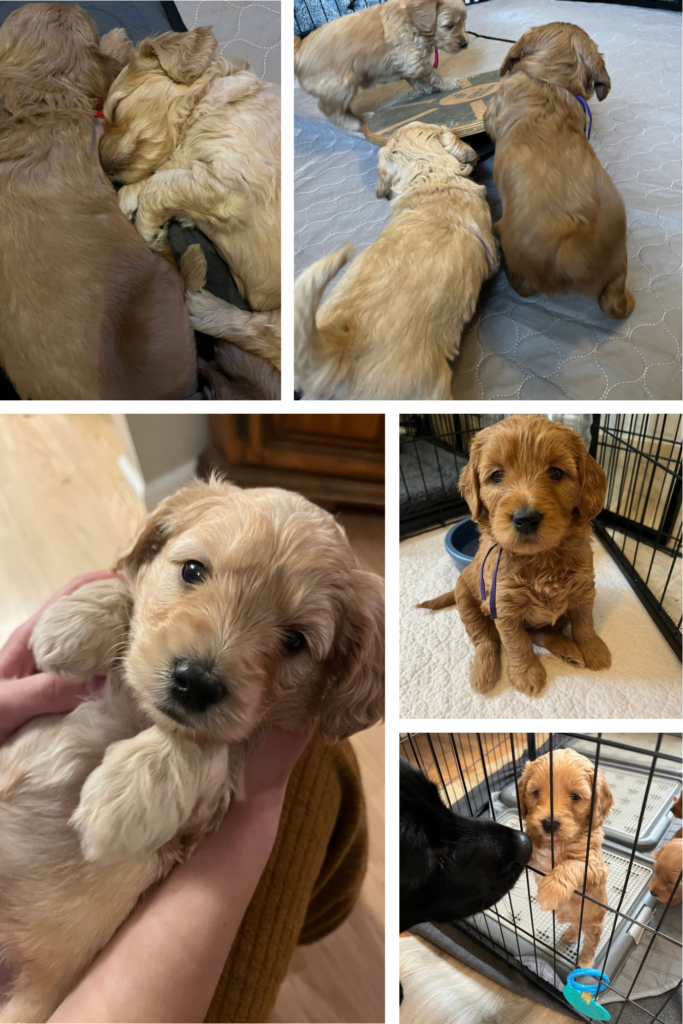
Potty Training & Crate Training
We have had cold weather here! The puppies have been able to go out and potty some, but the weather has not cooperated for it to be consistent at this point. While I think it’s important for the puppies to go out to potty in all weather conditions, their coats just aren’t quite thick enough for single digit weather and 5 inches of snow! In the next couple of days, the weather it going to warm up to the 40s and that will be perfect for them to start going potty outside more consistently. Even if the weather cools down again the week after, their coats should be thick enough to handle it (of course if it doesn’t get super cold!). I’m excited to bring them outside in the snow when it warms up! Also, I’m also excited for them to start going potty outside more often so I have less messes to clean up!
We now have 2 crates in the puppies’ pen. For the first few days I just let them go into the crates as they pleased & put a cozy bed in them so the puppies would find it to be an ideal napping spot, and they have! Now that they formed a positive association with the crate, I have been putting them in the crates as a group briefly as I clean their pen. Thus far, they just calmly watch me as I’m cleaning and don’t seem to mind at all.
At night, we have began to separate Heidi from her puppies in preparation of locking the puppies in their crates at night. Starting out, it will only be a five to six hour stretch and they will be in their crate with some littermates. Since they are so young, we will put 3 in each crate so they have a cuddle pal. As the weeks go on, we will switch to have only two in a crate & before they go to their new homes, start having them in a crate on their own. We also place a potty tray in their crates for them to potty on if they need to. Being so young, we wouldn’t expect them to go all night without needing to potty. However, we often find that many of the pups will hold their potty and wait until morning.
Eating
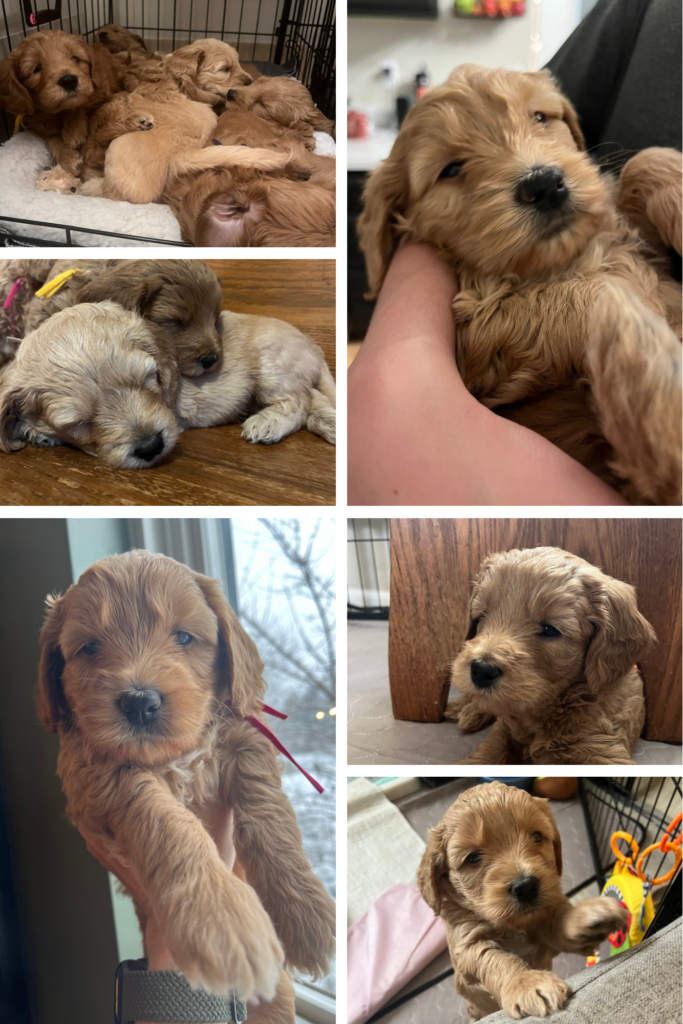
Heidi is nursing her pups less as she prepares to wean them. We also are giving them kibble 4 times a day. Part of the kibble is soften & part is not. We are going to gradually decrease the amount of soften kibble they get so when they go home they will just be eating their kibble as it comes from the bag.
Week 5 Conclusion
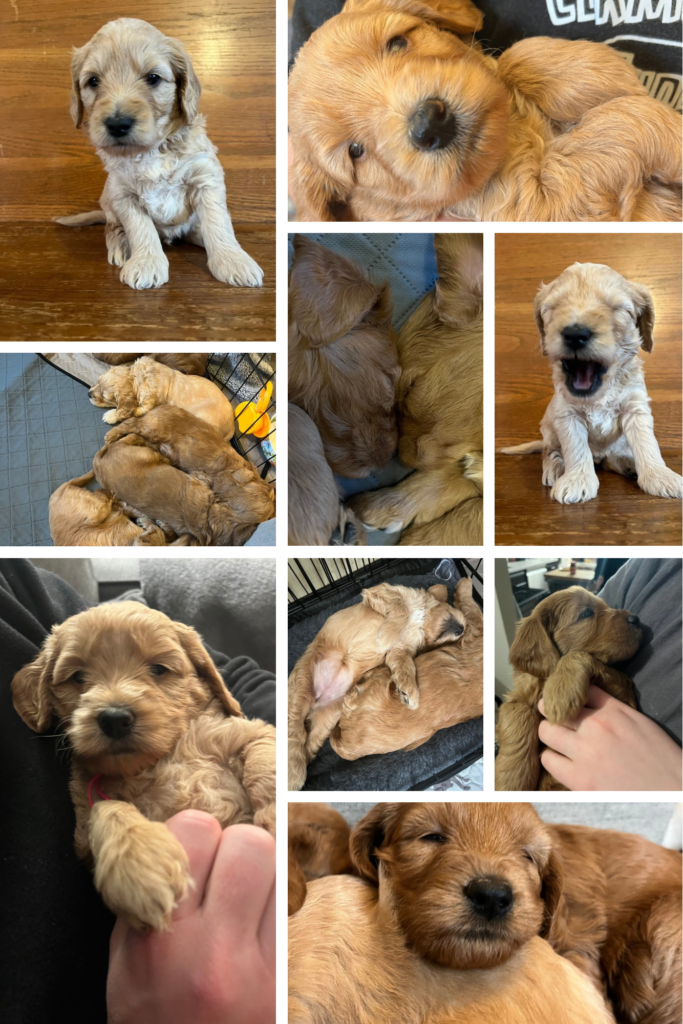
The puppies are growing leaps and bounds! Now the socialization process really begins in earnest as we prepare the puppies to go to their new homes!
Preparing For Your Puppy
The Importance of Naps
Like young children, puppies need plenty of naps! Making sure your puppy gets enough rest is essential to curbing bad behaviors and ensures your puppy will be healthy and happy.
Here’s what Timberidge Goldendoodles has to say on napping:
Think about a napping place – The puppies spend most of their lives sleeping now, but did you know that your new furbaby is going to need lots of sleep when you bring her home, too? Puppies, just like small children, require naps throughout the day. When your puppy is sleeping, try to allow her to rest untouched (it’s okay for noisy life to carry on around her while she snoozes, but it’s best not to physically disturb her as much as possible). This may mean that you need to guide her to a different spot than the one she’s initially chosen. Puppy Culture estimates that an 8-10 week old puppy sleeps 3 hours and then is awake for 1 hour before going back down for another nap. Puppies are like little children – sometimes they don’t realize that you’re tired and need you to put them down for a nap. Puppies can get over stimulated and become overly tired just like toddlers. It’s your job to help regulate them. AKC gives some helpful insight into the importance of puppy sleep (You can read the whole of the article here.):
Although puppies may seem like little bundles of energy, in fact, they sleep 15-20 hours a day. One minute your puppy may be a miniature tornado, and the next he’s fallen soundly asleep, almost mid-activity. Sleep is essential to healthy growth: during sleep his central nervous system, brain, immune system, and muscles are developing. All of that sleep also helps him rest up during growth spurts… household members, especially children, should leave your puppy alone while he is sleeping. Plan his day so that active time is followed by quiet time for sleep. He’ll most likely be ready for a nap after playtime or a walk, sleep for a while and then wake up ready for anything. Your puppy may nap every hour or so, sleeping from 30 minutes to as long as two hours. All of this sleep is perfectly normal.
Jane Reisen from the American Kennel Club (AKC)
Six Week Update

6 Weeks!
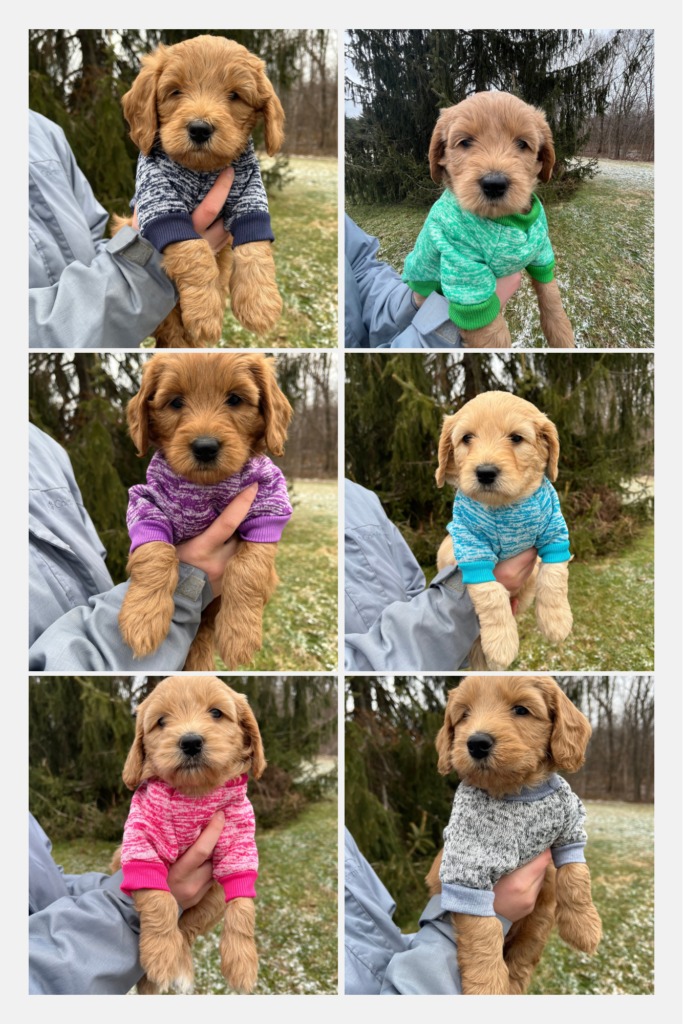
It’s hard to believe that Heidi’s puppies are already 6 weeks old! In just 2 short weeks, they will be ready for their new homes! This week has been full of outdoor playtime & playing in general, potty training, crate training, and more!
I’ll be sending your puppy home with a blanket that smells like mom & their littermates, but you are also welcome to send your puppy a Snuggle Puppy or some other toy to our house for us to get all the smells of mom & siblings on it to help for a smooth transition when they go home.
If you haven’t already, be sure to order your TLC puppy food. I’ll send a large baggie of food home. Even if you want to transition to a different type of food, it’s a good idea to transition slowly.
Playing
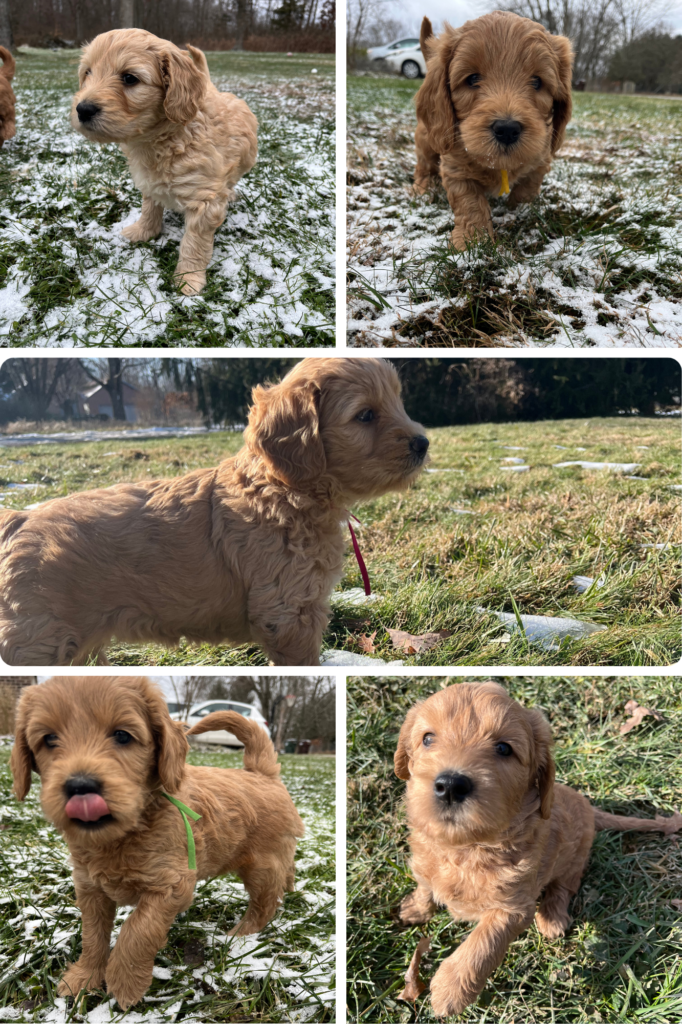
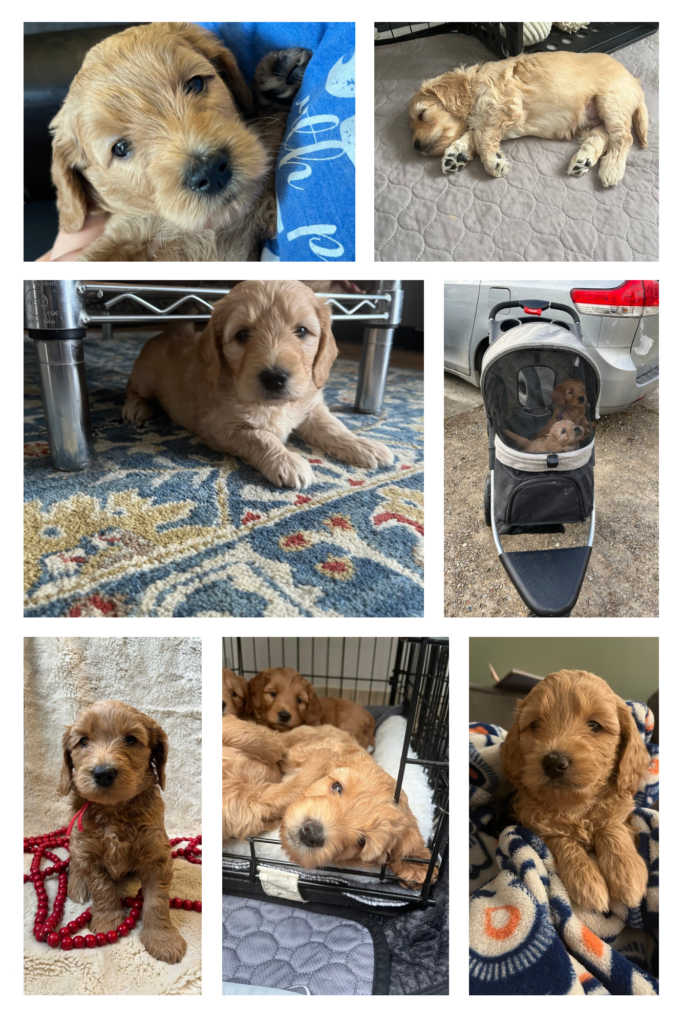
We’ve had quite the array of weather here in Goshen, OH. Perfect weather for acclimating the puppies to all the different weather they will encounter! We’ve had snow, extreme cold, wind, rain, and some days that were in the upper 50s. On the days that were in the 50s, we were able to bring the pups out to play! We always stay outside with them, & the puppies have given us the perfect excuse to get some sunshine! They even got to take a little stroll in a dog stroller. They are all so curious and love exploring when they are outside. The puppies are already eagerly searching for sticks to chew & love running around while out. Now that they coats have thicken, they don’t seem to mind the cold at all!
The puppies are so playful! When they are awake, they are either playing in their inside pen area, our family room, or being supervised outside. They view everything as something to play with, so we have to be careful of electrical cord & other things when they are playing. Puppies are a lot like toddlers, they always need supervision!
Potty Training & Crate Training
Potty training is underway. We are very busy taking the puppies outside after waking in the morning & from naps, after eating, or if they have been up for more than 30 minutes. Overall, we have very few accidents inside the house. Even with our success getting them to potty outside the majority of the time, young puppies require a lot of trips outside to continue to reinforce potty training and there will be a learning curve when they go to their new homes. It’s important for you to take them out frequently to help them understand where it is that you want them to go potty. And it’s important to remember, even when you do your best, puppies are puppies & there will be some accidents.
We have transitioned to have 2 puppies in each crate for night time. They are doing well with settling down & sleeping 6 to 6.5 hours. In the next week and a half, we will move the puppies to individual crates to help them begin getting used to being in crate on their own. We also are implementing some daytime crate time. For now it’s only for 3 hours max (but usually only 1-2hours). Having the puppies in their crates during the day for periods of time will help the puppies be familiar with crates when they go to their new homes.
Week 6 Conclusion
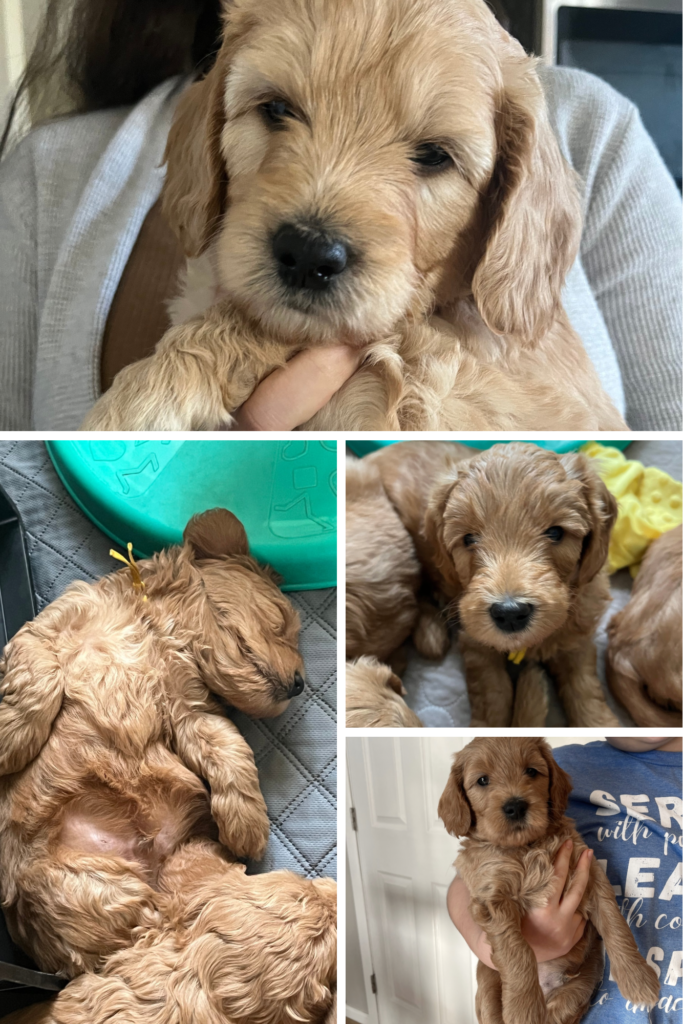
It never ceases to amaze me how quickly puppies grow & learn! These next couple of weeks are going to be busy potty training, crate training, and doing all the things to prepare the pup for their new homes!
Preparing For Your Puppy
Potty Training
My hope is that our efforts of working on potty training while the puppies are with us will make potty training go smoothly when you bring your puppy home. Already they seem to prefer to go potty outside rather than inside. We have even noticed that when they wake up from their naps, they calmly sit by the gate for us to come and get them to bring them outside. But nonetheless, measures will have to be taken when you bring your puppy home to carry on with potty training.
Potty training your puppy will start right when you get your puppy. Before you leave my house, we will try to get your puppy to go potty. If you have a long car (I’d say over an hour), you’ll likely have to stop for a potty break. Be sure to do your best to avoid rest stops and other places where other dogs frequent to help prevent your puppy from catching germs. When you get home, the first thing you will do is bring your puppy to their potty location. When the pups go potty outside at our house, I say, “ Yes. Good potty.” You don’t necessarily have to say what I do, but be sure to encourage your dog as they go potty and use the word you plan to call it so they become familiar with it. Your puppy will need to go potty every 30 minutes (could be as often as 20 minutes at first) while they are awake or right when they wake up when they first come home. This may seem excessive, but if you put in the work early on you will set the tone for potty training and make the process go more smoothly. And really your puppy will nap a lot the first few weeks, so it’s more realistic to get them out every 30 minutes when they are awake than you would think. I set a timer on my watch so I will remember. You will have to use discretion & trial and error as you seek to extend the time in between potty breaks.
Even if you have a fenced in backyard, I highly recommend that you commit to go outside with your pup when they go potty. Puppies are notorious for getting distracted and not going potty, then they will come in and go in the house! Potty training a puppy is a lot like potty training a toddler. It requires lots of potty trips and yet accidents will happen no matter how diligent you are! So be prepared to have lots of patience & remind yourself that this phase will not last long!
It’s also important for you not to scold or discipline your puppy when they do have accidents in the house. If you catch them going potty, you can make noise to startle them to stop them from going, then quickly bring them outside (and be sure to praise regardless if they started to go inside, if they finish outside). But if you happen upon a mess, you just clean it up and make a plan to bring your pup out more frequently. Your puppy will not understand why you are scolding her. Be sure to have a cleaner that is able to totally eliminate the odor so they don’t smell it later and think it is an okay spot to go.
Having your puppy on a schedule, utilizing a crate, and limiting food and water intake in the evening will also help to get your puppy potty trained. Don’t be surprised if they need middle of the night potty trips. When you take them out to potty in the middle of the night, it’s important that you say and interact with your dog very little. You take them out, let them potty (you can tell them “Yes. Good potty!”), then you put them back to bed. If you talk to your dog and give her too much attention she will likely not want to go back to bed. I find if I go to bed a bit later and wake up a bit earlier, the night awakenings last no more than a week.
Here’s a video with more information on potty training:
Age Appropriate Exercise
We’ve all heard the adage, “a tired dog is a happy dog.” And yes, a dog who has been provided with stimulation & proper exercise and play are dogs who are certainly more content and happy. Yet, there are proper precautions that must be taken with puppies as they are growing and developing. Be sure to ask your vet and look over Puppy Culture’s exercise chart for guidelines and tips on age appropriate exercise for your puppy.
This is what Timberidge Goldendoodles has to say on this topic:
Familiarize yourself with what sorts of activities are appropriate for your puppy at different stages of development. You want to give your puppy a variety of unique positive experiences, but your puppy is still growing & developing, so you don’t want to push your puppy too far. For instance, climbing up one to two stairs is an appropriate challenge but climbing a flight of stairs is not a good idea for a young puppy (a study done on 500 dogs showed that puppies allowed to climb a flight of stairs regularly before 3 months old were more likely to develop hip dysplasia). Remember, free running and playing is a great option because your puppy can rest whenever she feels inclined to do so. If you’d like to read more about puppy exercise, check out AviDog’s puppy exercise guidelines. This article from AKC also gives some helpful puppy exercise tips.
Seven Week Update
7 Weeks!
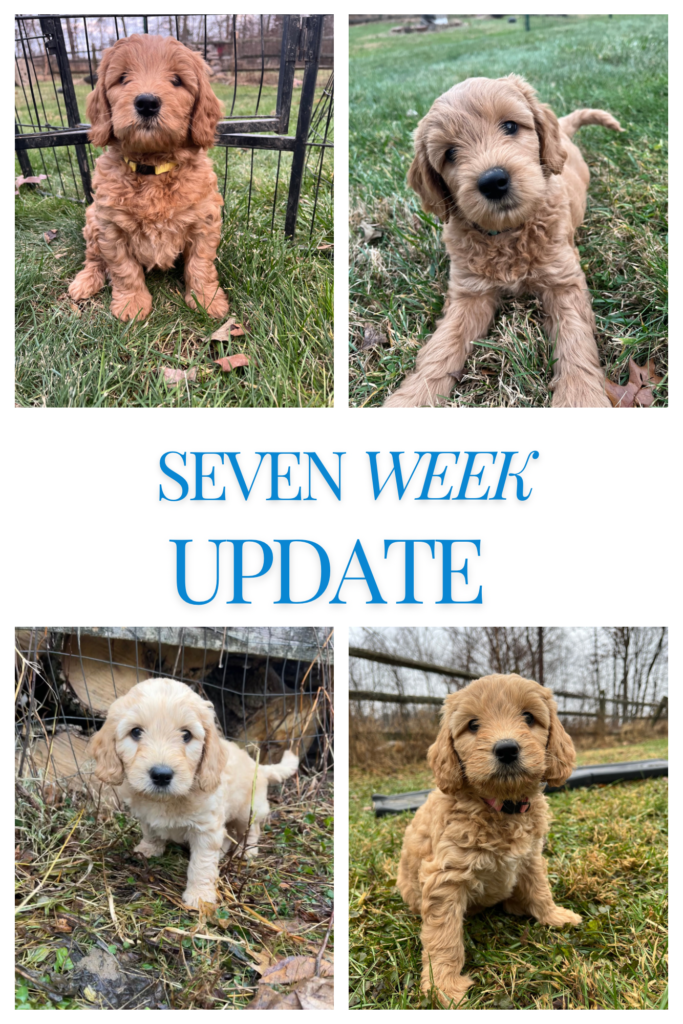
Only one week left with all six of Heidi’s puppies! Our time with them has flown by! This week, they have had an increasing desire for human company over their littermates. They still play plenty with their littermates & it’s important for their development, but if they know we are around, they want out of their pen to be near to us. We rotate having the puppies in our kitchen & family room throughout the day so they can spend time with us & be in a different environment, along with letting them have supervised outdoor time. The puppies are learning that sitting quietly and waiting gets them selected to come out of their pen, rather than jumping and trying to climb out. This is referred to as “sit to say please” & can be used in many scenarios: going outside, before exiting their crate, before receiving meals, before getting pets, and so on. Here’s a Baxter and Bella video on “sitting to say please”
Crate Training
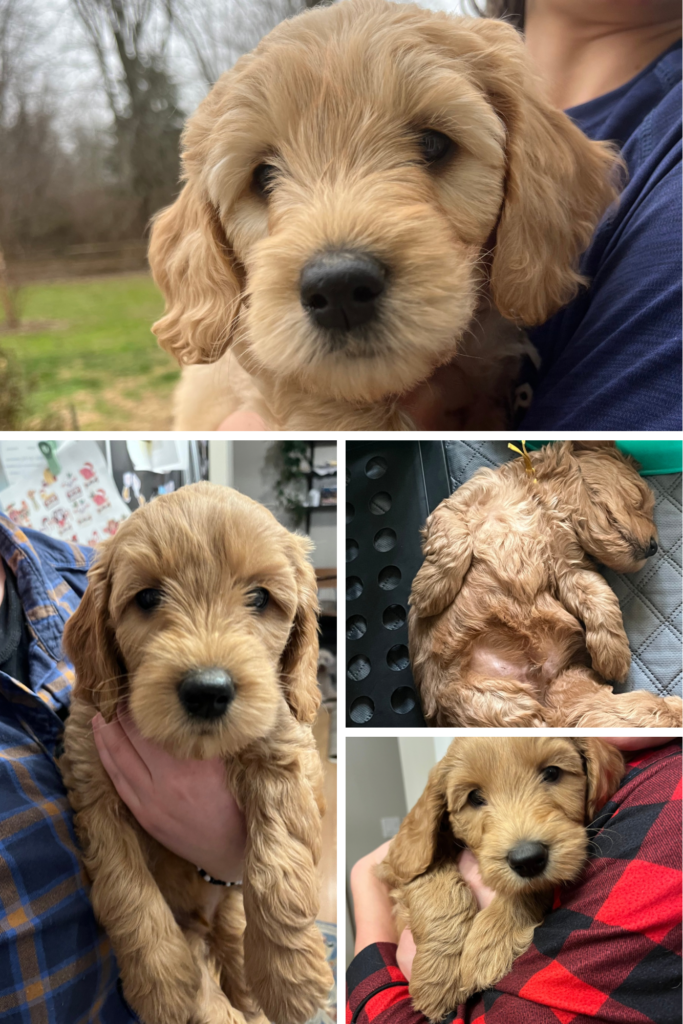
We have continued to make progress in crate training. The puppies sleep in pairs in their crates & this week will move to being in their own crate. We put them to bed after brining them out to potty one last time between 10:30-11:00 and they stay in their crates until 5:30-6:00 with no problems. Moreover, we have been implementing daytime crate training. We aim for the puppies spend 1-3 hours in their crates daily while I ran errands and such. My hope is this will make crate training easier for you. I’d recommend getting a tasty treat/bone that your dog only gets during their daytime crate time. A bully stick (be sure to get a holder for it) or a Kong filled with a frozen treat would be perfect!
It’s important to note that you should absolutely assume you will have to get up to take your puppy potty in the middle of the night. Your puppy will likely feel all out of sorts being in a new environment away from his littermates and will likely not sleep as well. Also, daytime crate training is different than nighttime crate training. Don’t expect your puppy to be able to spend as much time in their crate during the day as they do at night. It takes time to build up the amount of time a puppy can spend in their crate during the day. Refer back to previous week post to be refreshed on puppy crate training.
Potty Training & Outdoor Time
Potty training has gone off without a hitch! Most of the puppies’ potties are outside. We always take them out first thing in the morning between 5:30 and 6 and the go pee & poop. We try to linger for a bit because it isn’t uncommon for them to go pee and poop again. Then they go inside where we give them their water and food & let them play for 15 minutes or so, then bring them out to potty again. Morning seems to be the time where they need to go potty multiple times. Then they typically nap for 1-2hours. When they wake from their nap, we take them outside to potty again. At this age, they poop often. So be sure to always linger outside after the pee to see if they also need to poop.
When our puppies are outside, we always stay outside with them. We live on 6 acres with a nature preserve in front of our property and to the side, so we have lots of wildlife! Just as the sun was rising this morning, my husband was outside with the puppies and he was pacing back and forth near them and he suddenly saw a great horned owl swoop down towards the puppies! He frantically ran over waving his arms to scare it away, and thankfully it worked & the owl flew off! The puppies are the size of wild rabbits, so it makes sense the owls view them as food! With that to say, be sure to watch your puppies when you bring them outside!
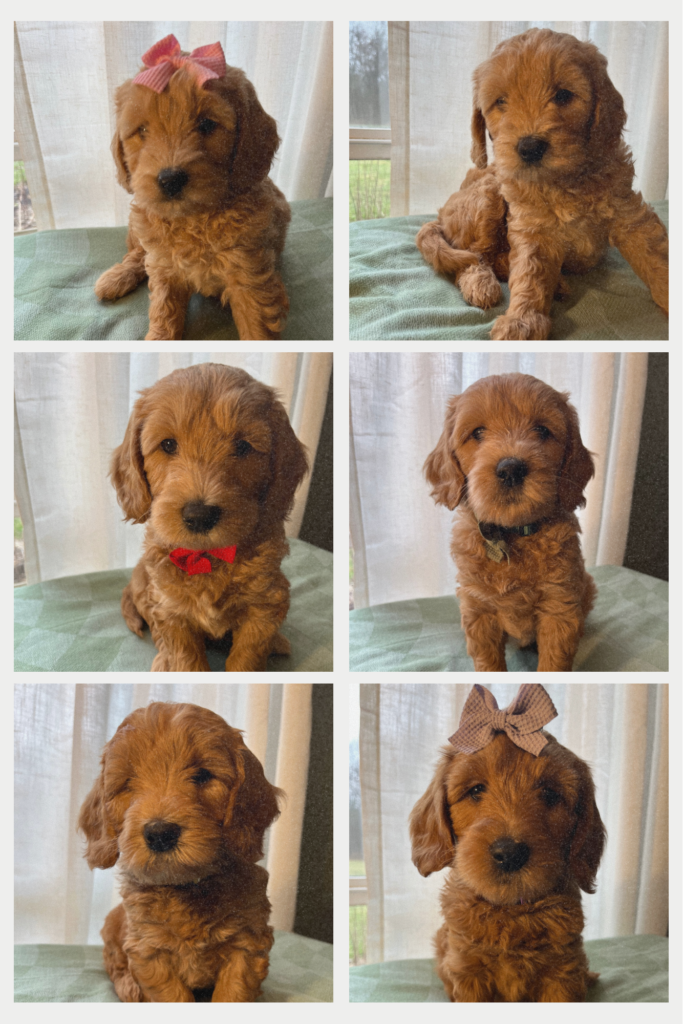
This week we had warm weather & the puppies enjoyed spending extra time outside. Today the weather is cold and windy, so we won’t be spending as much time outdoors. We have a pen that we put the puppies in to keep them contained as they all love to explore and will run off in different directions! We take the puppies out to explore independently & have started practicing getting them used to a leash.
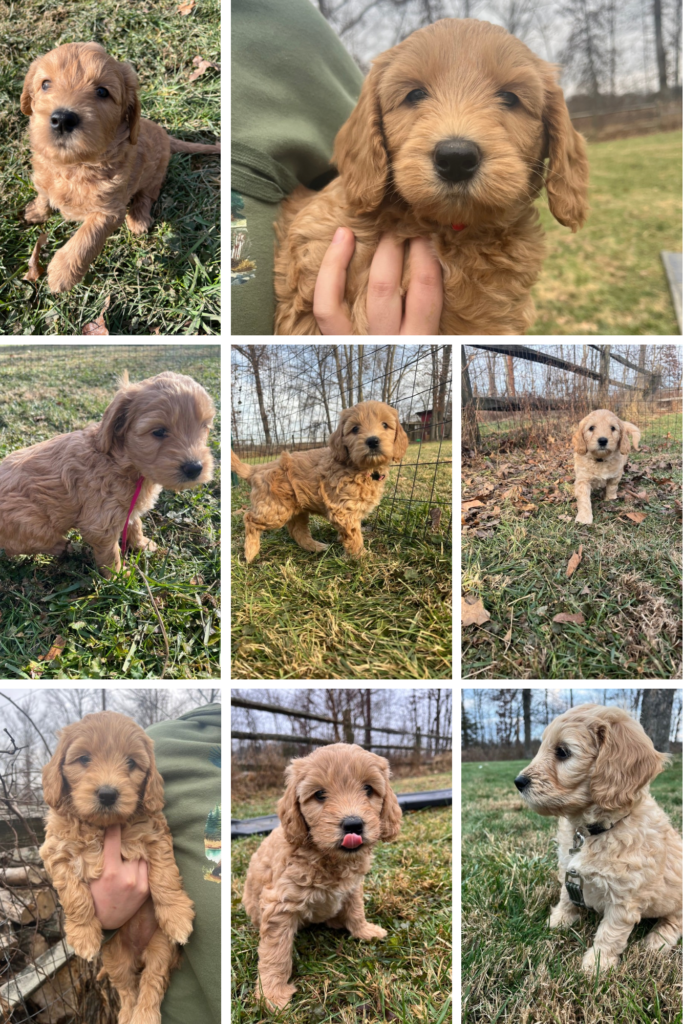
Socialization Continues
We are in full swing socializing the puppies. There are so many little things we do that gently expose them to new things so that they wont find them scary as they get older and help them to become overall confident dogs. From exposing them to leashes, crates, bathtubs, different sounds, floor textures, animals (cat and goats), people, and random items like a balloon, umbrella, and vacuum- their list of positive interactions continues to grow. Be sure to check out my post on socializing your puppy again so you’re prepared to continue to socialize your puppy when he comes home.
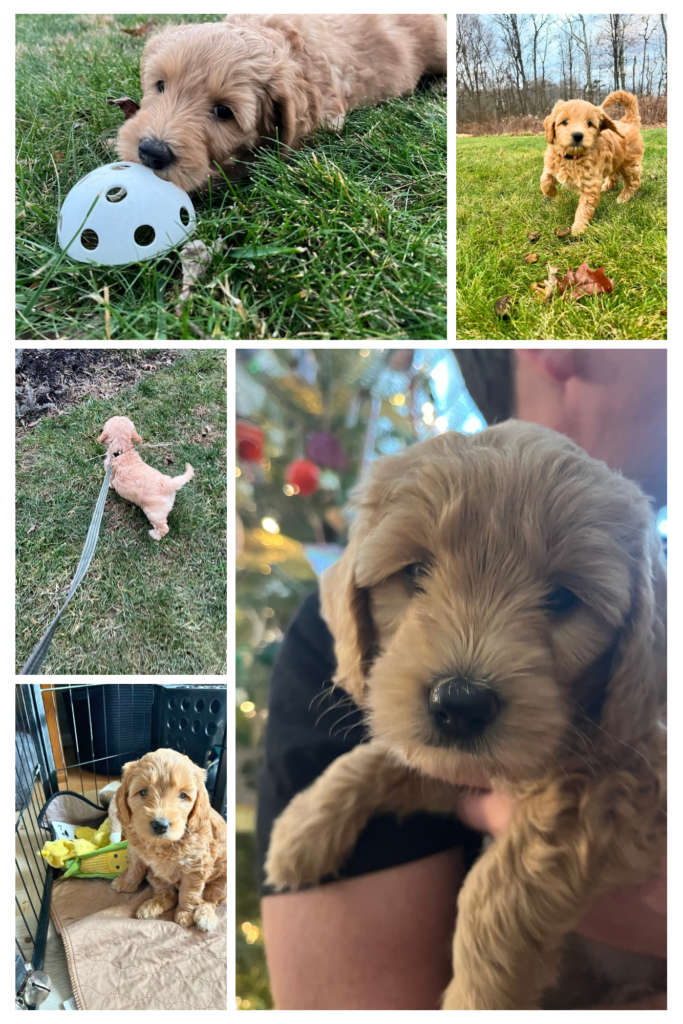
Week Seven Conclusion
One week until most of the puppies will go to their new homes! Are you ready? Be sure to look through the blog post tips to refresh on all the different aspects of caring for your puppy. Here are things I recommend you get for your puppy, and there are plenty of resources online that have new puppy recommendations. Not listed but could be helpful, is a puppy car seat for your pup.
Your puppy received a dewormer called SafeGuard this week. It’s a 3 day treatment that is recommended for puppies 6 weeks and older (they received Nemex the 1st two times & while it’s less harsh a young pup’s stomach, it doesn’t cover as many parasites as SafeGuard does). The puppies will also be going to the vet tomorrow morning, and the vet will give me their first dose of heartworm medicine.
Preparing For Your Puppy
This week I’m squeezing multiple topics that my partner breeder, Timberidge Goldendoodle has highlighted in their blog.
Get ready to play educational games with your puppy
Did you know that there are fun games you can play with your puppy that teach him beneficial skills? It’s great to incorporate regular educational games into your puppy’s routine, so read through these suggestions, add any needed supplies to your puppy shopping list, and get ready for puppy playtime!
- Ball On The Wall – Encourages retrieving
- Supplies: A ball that your puppy can carry in her mouth
- How to play: Sit on the floor about 1-5’ from a wall. Put your legs in a “V” and sit facing the wall with your puppy between you and the wall. Toss the ball at the wall, encouraging your puppy to go after it. Give your puppy lots of praise when she brings the ball back!
- Variation: Once you’ve mastered Ball On The Wall, try playing retrieve in a hallway with all the doors closed (so your puppy can’t run away with the ball).
- Toy Trade – Prevents resource guarding
- Supplies: A toy that your puppy likes but doesn’t highly value and a high value treat
- How to play: Briefly play with your puppy using the toy. Ask your puppy for the toy by offering her a high value treat. Reward & praise her for giving you the toy, and give the toy back to her as soon as she finishes chewing. Gradually work on having her give you objects of higher value (i.e. a bone).
- Variation: Work on teaching your puppy the command “give” and ask her to drop the toy/bone on command in exchange for the high value treat.
- Hide & Seek – Encourages recall
- Supplies: Yummy treats
- How to play: Run away from your puppy, hide behind a corner, tree, couch or other object, and call your puppy to encourage her to find you. When she does, give her lots of praise and a yummy treat.
- Variation: Play Ping Pong by having a partner play with you and take turns hiding. While the first person is rewarding the puppy for coming, the second person hides.
Fostering the Child-Puppy Relationship
Goldendoodles are family dogs by nature, but there are a few steps you can take to help set your puppy and your kids up for a lifetime of friendship:
- When your puppy is sleeping, let her sleep – your puppy is growing & developing, and she NEEDS that sleep. Teach your children to respect a sleeping puppy by not interrupting her. Your puppy’s crate should be her safe retreat. When she’s in her crate, allow her to enjoy safe, undisturbed quiet time- this doesn’t mean that you all need to tip toe quietly around when the puppies napping! It just means that when the puppy is napping, let her enjoy that peaceful sleep untouched and wake up on her own good time.
- Involve your children in daily puppy care – allowing your children to participate in caring for the puppy will help grow the bond between them and their furry friend. It also helps the puppy learn associate good things with little people and helps her see the children as above her in the pack order. Younger children particularly love being helpers. Our kids enjoy (aka fight over) feeding the dogs, letting them out of their crates, opening the back door to let the dogs in/out, etc. We let them help brush the dogs with much supervision (remember, we want all puppy experiences to be POSITIVE!). Our children also love holding leashes on walks (children should only take your dog on a walk with adult supervision). If you don’t trust your puppy to not pull a young child over, you can attach two short leashes to one dog so both you & your child have a leash to hold. Be cognizant of your child’s age and maturity level. Older children can be more actively involved and younger children can be involved in smaller ways.
- Encourage your children to play with the puppy – puppy nips and jumps can be intimidating for some children. Teaching children how to act calmly around a puppy and how to play intentional games such as fetch and educational games (see some suggestions under week 3) can help both the children and the puppy learn how to interact with each other. Explain to your children that your puppy isn’t trying to hurt them when she’s nipping – she’s asking them to play with her.
- Include your children in puppy training – when you enroll your puppy in a puppy kindergarten class, ask about bringing your child along (assuming he’s old enough and mature enough to participate). Our children enjoy practicing sits and downs with our dogs, dolling out hotdog slivers to the eager participants. Our dogs think it’s great! Be sure to always supervise children/puppy training sessions.
- Teach your children to respect the puppy – sometimes it’s challenging for children, especially young ones, to distinguish between their favorite stuffie and a real-life fluffy puppy. Many children need to be patiently taught to be gentle and kind with animals. “No hugging dogs” is a rule in our home because a preschooler bear hug around the neck is too much our small dogs (our dogs don’t mind but we’re afraid they might accidentally get hurt since they’re significantly smaller than the ones dolling out the hugs). If there are times when you aren’t able to supervise your children’s interaction with your puppy, it might be best (and safest) to put your puppy in her crate. Remember, that crate should be your puppy’s safe place. This article by AKC has more helpful tips about teaching children to respect dogs.
- Teach your puppy to respect your children – sometimes children play with their puppy like they themselves are, well, a puppy. Young kids particularly may act like a dog when playing with their new furball. While you want your children to have fun with their puppy, you also want your puppy to know that your child is a leader who is to be respected and not a puppy littermate. Encouraging your children to care for the puppy (i.e. feeding), train the puppy (i.e. having the puppy do a few sits & downs each day), and do bonding exercises (see the above video in week 3). These are all are easy ways to help establish your child as a leader over your puppy and not a puppy peer. If you find that your puppy is particularly mouthy and jumpy with your child, your puppy is likely viewing your child as a littermate.
- Establish a safe place for your dog, usually either a dog bed or crate. Teach your children that when the puppy is in her safe place, they need to let her alone and they may not touch her. Your puppy will learn that she can retreat to her safe place if she becomes overwhelmed with a situation or if she just needs a nap.
Eight Week Update

8 Weeks!
This week we have been busy reinforcing “sit to say please”, getting the pups used to leashes, brushing, body handling, and squeezing in all the socialization we can before they leave. The puppies desire human interaction & it’s been a lot of work making sure their human social needs are met. I always know puppies are ready for their new families when I find they would prefer to hang out with humans rather than their littermates!
We are continuing to work on potty training & crate training. Whenever possible the pups are brought outside to potty. They have been spending 1-21/2 hour periods in their crate when I have to take my kids to various activities & sleep in their crates for 7 hours overnight.
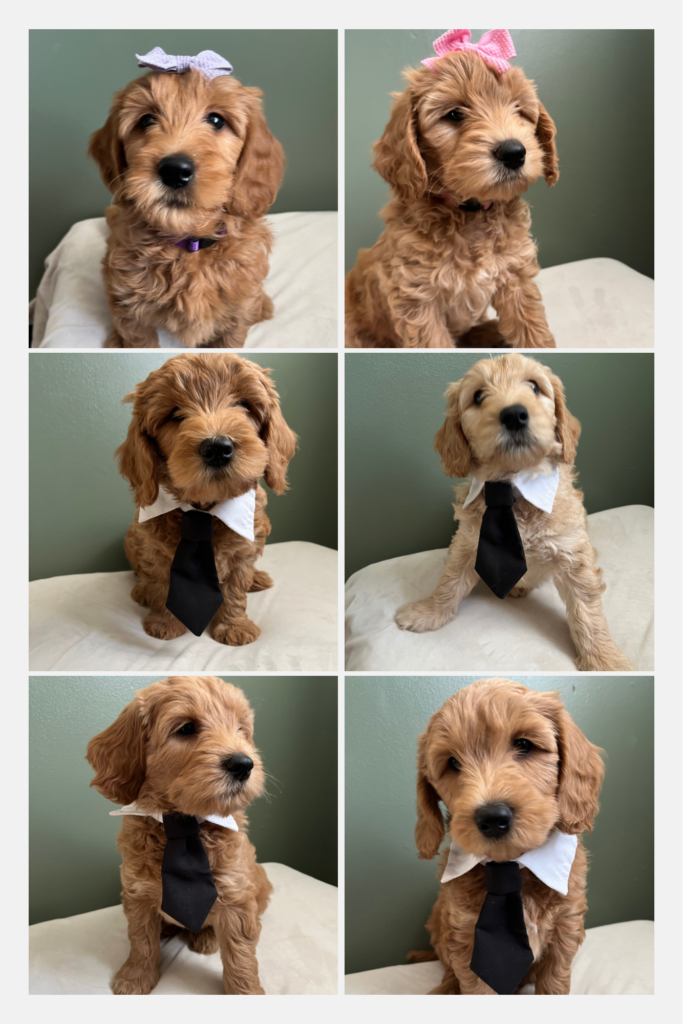
Vet
The puppies had their vet appointment on Tuesday (12/30) at Hopewell Animal Hospital . All the puppies were given a clean bill of health & did wonderful. The vet and her assistants even commented on how great the puppies’ temperaments were! They were given a thorough examination, their first set of vaccinations (so they will be due for their next set in about 4 weeks), were microchipped, & we received their first heartworm/ flea & tick pill that will be given to them by their owners on 1/6.
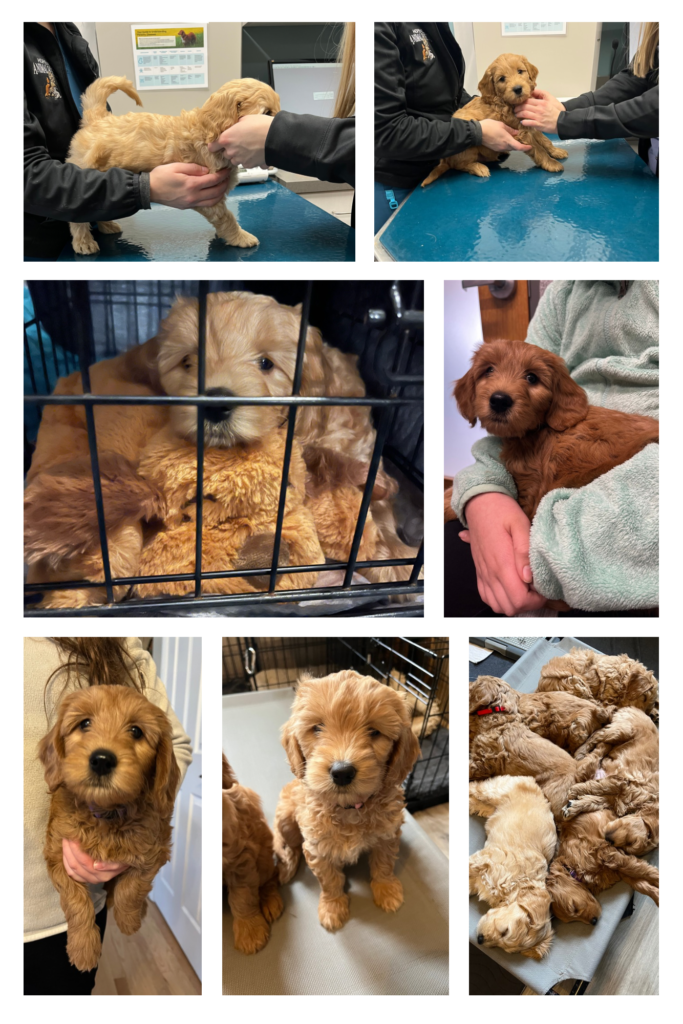
Field Trip
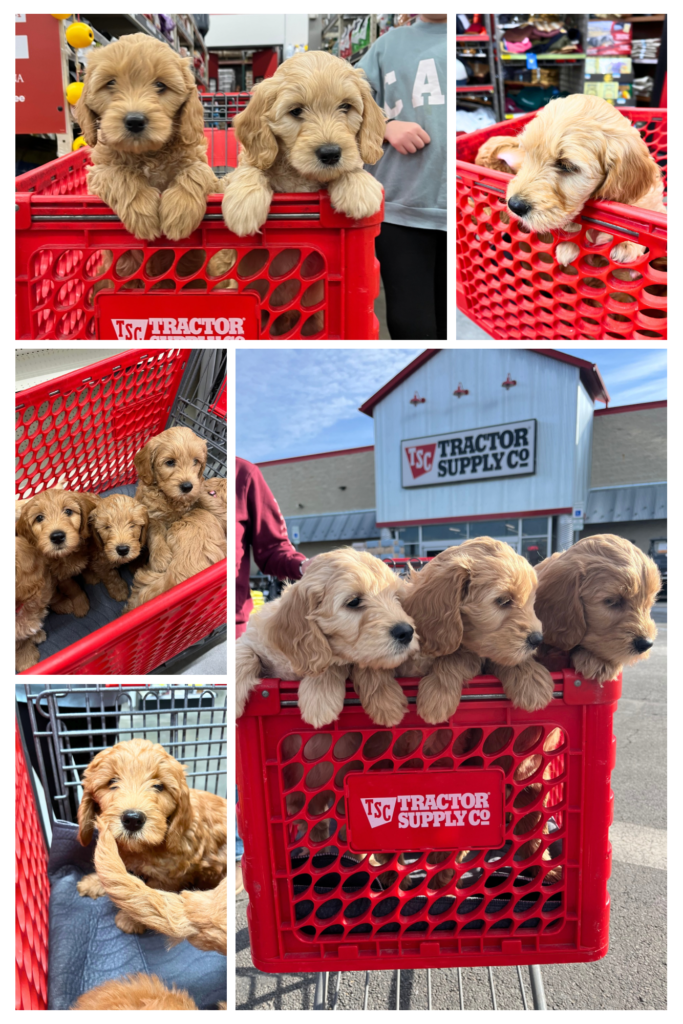
The pups also got to go on their first field tip to Tractor Supply. We chose Tractor Supply because they allow animals in their store and at the same time isn’t as congested with unfamiliar dogs like a pet store would be. The puppies were all very curious with all the new sights, sounds, and smells. It’s important that you continue to have “field trips” & provide your puppy with many different experiences to ensure they are well socialized.
Week 8 Conclusion
We are thrilled that all Heidi’s puppies have found their forever homes! While we will certainly miss her puppies, it makes it easier to know they all have wonderful homes they are going to.
Preparing For Your Puppy
This week I’m squeezing multiple topics that Timberidge Goldendoodle has highlighted in their blog.
Grooming
Your puppy has had her nails clipped and hair trimmed during her time with us, so she has already had her initial introduction to a lifetime of being groomed. Take her to the groomer for a puppy clip after her 16-week immunizations. The groomer will bathe her, trim the hair out of her eyes, give her a sanitary clip, and trim her nails. Since she will need regular grooming throughout her life, both she and the groomer will benefit if she becomes accustomed to being groomed from a young age, even before she’s ready for a full haircut.
When should she have her first big girl haircut? The wavy adult coat will start replacing the soft, fluffy puppy coat around 5-6 months of age. You’ll notice the new hair coming in is kinkier than the pure fluff on top. Waiting to cut the hair until the adult coat makes its debut beneath the layers of puppy plush helps ensure that the adult coat remains soft. Many poodle groomers and poodle fanciers claim that shaving a poodle or goldendoodle down before her adult coat starts coming in could damage the adult coat, affecting the texture. While there isn’t any substantiated evidence that this is true (at least that I can find), it’s worth avoiding just in case. That doesn’t mean that your puppy might not benefit from a puppy clip in the meantime! Don’t let your puppy’s hair get out of control! As aforementioned, take her to the groomer for a puppy clip after her 16-week immunizations. When the time comes, check out the grooming section on our website for a variety of goldendoodle haircut pictures. Learn more about your Goldendoodle puppy’s first trip to the groomer. We have a plethora of haircut resources under the “grooming” tab on the main menu bar.
Waiting until 6 months for the first full big girl clip does NOT mean you’re off the hook for grooming at home! You should regularly groom your puppy: brushing her hair, cleaning her ears, brushing her teeth, clipping her toenails, and checking her for any anomalies (i.e. ticks, cuts, etc.). You want your puppy to become accustomed to being brushed and handled all over from a young age. We HIGHLY recommend doing regular bonding/body handling exercises with your puppy. Goldendoodles are a breed that likes routines (thanks to those poodle ancestors), so it’s nice to do bonding exercises every night just before your put your puppy in her crate for bed. It’s easy to incorporate different parts of grooming into your nightly bonding exercises, just doing a little here and a little there since young puppies don’t have the attention span for lots of grooming at once.
The best way to prepare for a puppy is to prepare yourself!
Baxter & Bella: first 2 weeks with a new puppy videos are all short 1-3 minute videos that are helpful to watch. You’ll learn how to teach your puppy and get ideas for establishing good behaviors from day one. These videos show Amy Jensen training Chili, her young doodle puppy.
- Puppy pen & day one crate introduction
- Impulse control
- Toy trade game and building a marker
- Mat work & teaching your puppy to settle
- Teaching your puppy to sit to say “please”
- Settling in a crate, redirecting
- Come
- Keeping an eye on your puppy while you’re being productive & preventing resource guarding
- Helping your puppy enjoy being brushed
- Introducing a harness or therapy vest
- Walking on a leash
- “Drop it” command
- Example of a puppy-sized training session (training sessions should only be 1-2 minutes long for an 8-10 week old puppy)
Amazon Associates Disclosure
We are a participant in the Amazon Services LLC Associates Program, an affiliate advertising program designed to provide a means for us to earn fees by linking to Amazon.com and affiliated sites.